

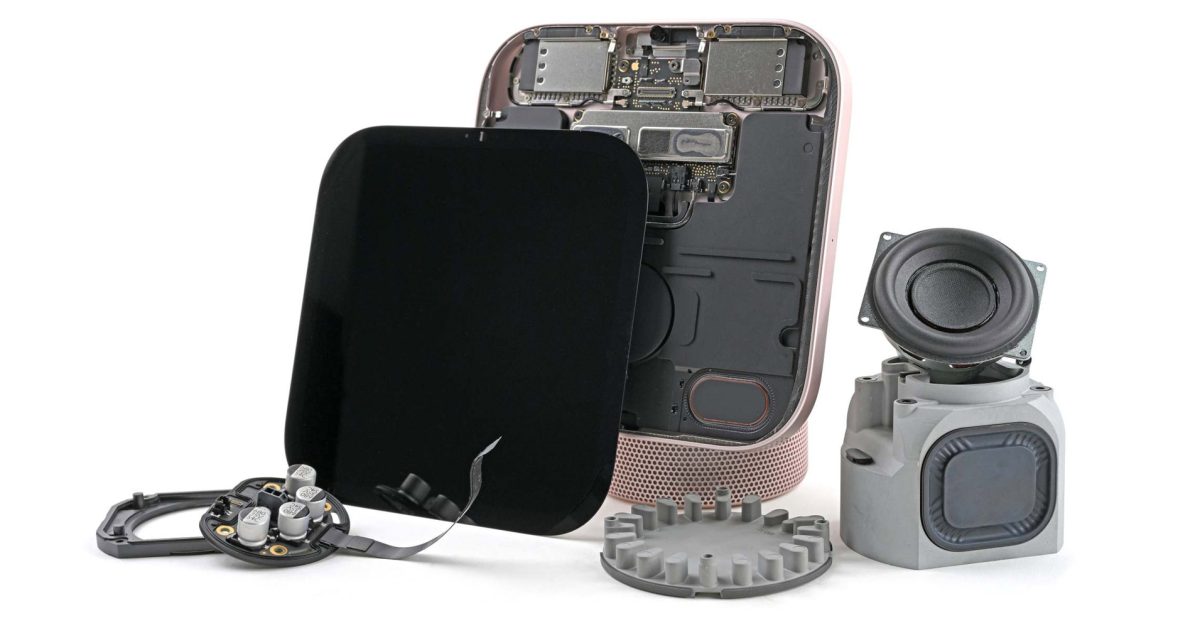
iFixit has published its teardown of the new Apple HomeView, and the device proved far harder to open than recent Apple products. Days after the device launched last week, the repair site found heavily glued components, a broken speaker and a logic board that required considerable force to remove.
Heavy adhesive slowed nearly every step
iFixit said the Apple HomeView put up a fight nearly all the way through the teardown. Several major components, including the display, speakers, antennas and logic board, were glued or bonded with adhesive. Recent teardowns of other Apple devices have often found better repairability, with more modular components and easier access to internal parts. The HomeView did not follow that pattern.
Even after the adhesive holding the display speakers was soaked in isopropyl alcohol, removal remained difficult. One of the speakers broke apart while it was being pulled out. The logic board also needed considerable force to separate from the chassis because thermal adhesive held it in place. For repair technicians, adhesive like this usually means extra time, specialized solvents and a higher risk of damaging parts during removal.
Tabletop and wall-mounted models differ inside
iFixit examined both HomeView variants: the tabletop model and the wall-mounted version. The two share a design but are not identical inside. The wall-mounted model has a slightly wider logic board, which makes room for capacitors that sit in the base of the tabletop version. The CT scan published by iFixit, which can be viewed in an interactive 3D format on its blog, makes these layout differences easier to see.
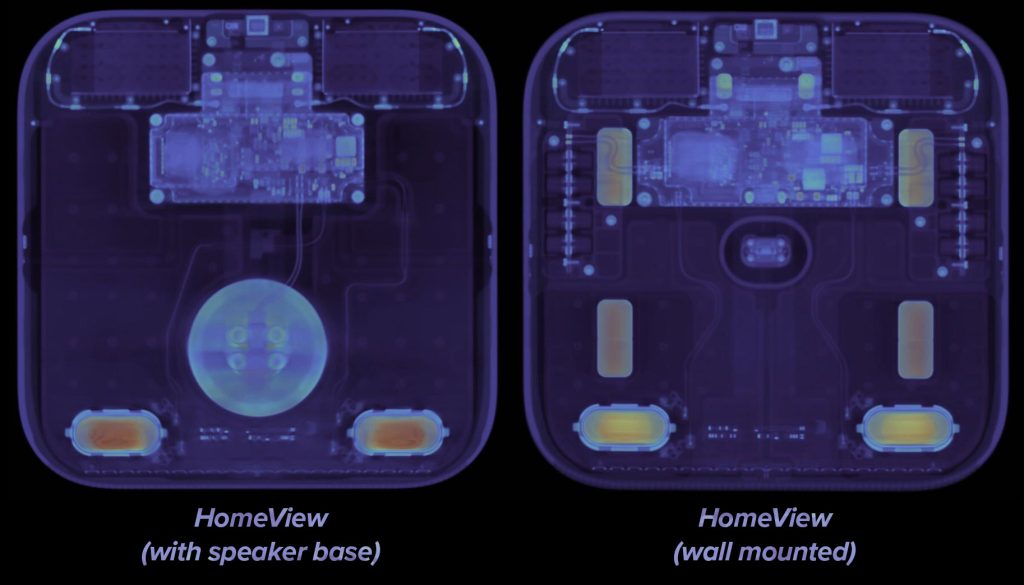
Those internal differences also explain part of the audio gap between the two models. Because the wall-mounted version has a wider board, it fits smaller internal speakers. Apple had already acknowledged differences in the audio systems of the two HomeView models at launch, and the teardown shows a physical reason behind them.
Display and base access posed the biggest problems
On the tabletop model, separating the display from the base was one of the hardest steps. According to iFixit, the job requires either specialized tools or extensive disassembly of the display assembly, which could damage parts. The problem comes from the way Apple routed the connecting cables through the pivot mechanism that holds the display.
Once iFixit reached the base, the teardown found a few easier areas. The USB-C port is modular and relatively easy to access. The passive radiators and the board that powers the lower assembly were also simple to reach. Those parts give a small bright spot in an otherwise difficult teardown.
Still, the base had its own trouble. A very short cable links the woofer to the board underneath, and that made disassembly hard. iFixit questioned how a technician could reconnect the cable during reassembly, since the short length leaves little room to work with.
iFixit’s verdict and what it means for owners
iFixit does not have an official repairability scorecard for this category of device. Even so, Shahram Mokhtari gave the Apple HomeView a joking score. He said he would rate it “BEEP this thing” out of 10, a verdict that reflects how difficult the teardown was.
For owners, the findings suggest that out-of-warranty repairs could be costly and complicated, especially for the display, speakers and logic board. Glued assemblies and short internal cables make it harder for independent shops to swap parts without causing new damage. Buyers who expect to repair or upgrade their own hardware should weigh that before purchasing. iFixit’s teardown is a single look at one product, and its findings do not show how Apple handles repair parts or service programs for the HomeView.
The teardown video and iFixit’s blog post, which includes the interactive 3D CT scan, are available on the iFixit website for readers who want the full breakdown of each component.