

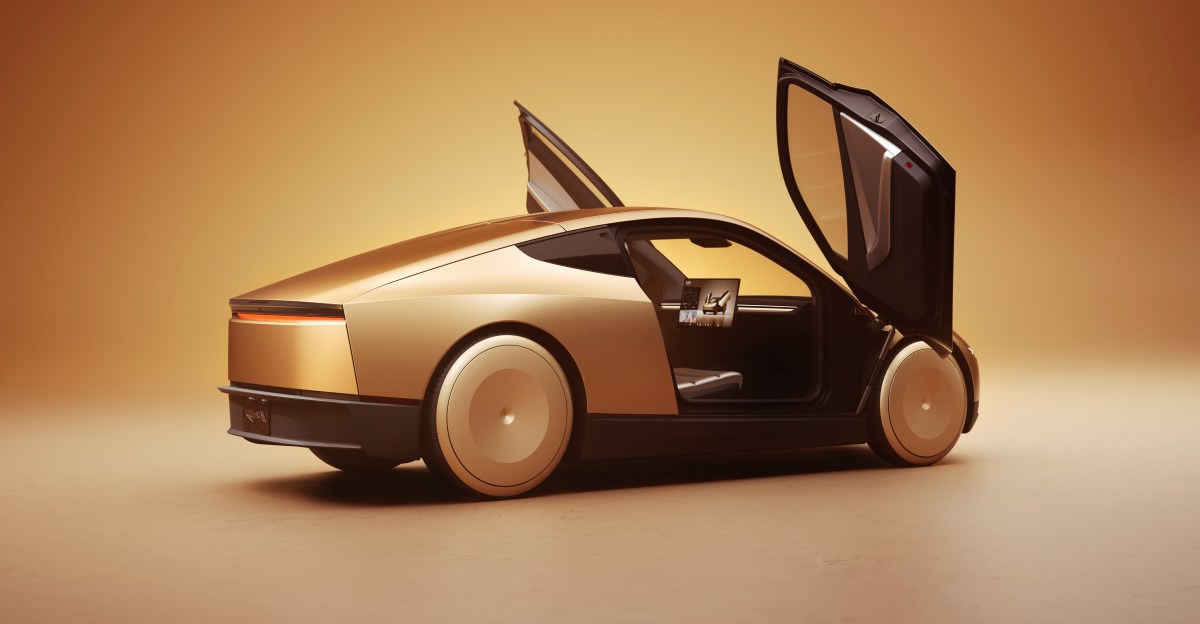
Tesla is offering some customers the chance to buy a Tesla Cybercab for personal use, a move that puts the company’s robotaxi plans in direct contact with private ownership. The offer comes with a mandatory monthly fee and terms that limit what owners can do with the vehicle. Tesla’s Robotaxi account on X announced the invitation and shared screenshots of the order page and the invite email.
How the Tesla Cybercab offer is priced
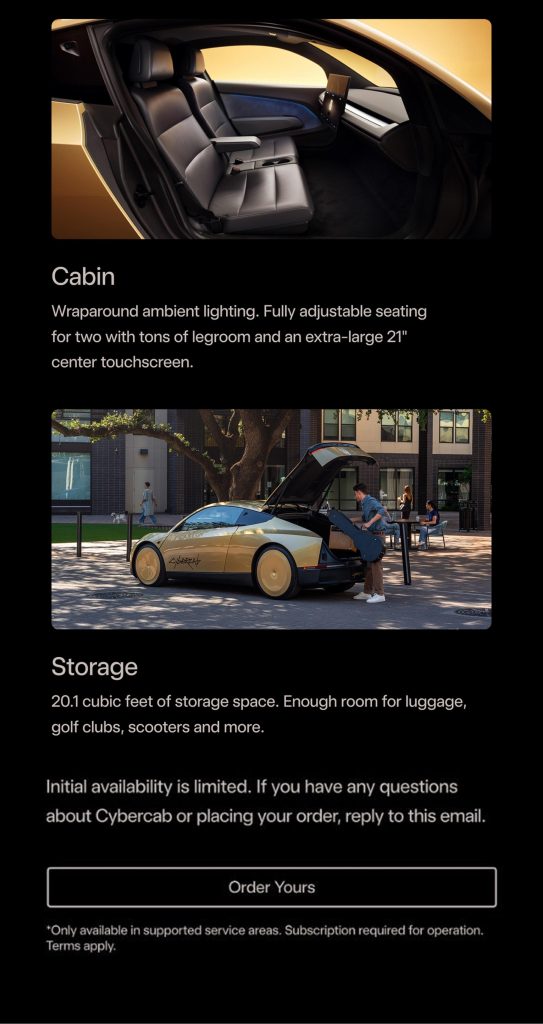
The Tesla Cybercab is listed at $29,990, plus a mandatory $299 per month Autonomy Subscription. The vehicle is a steering-wheel-free two-seater, and Tesla says it will only be sold in supported service areas. In practice, that means buyers must live in one of the cities where Tesla already runs its Robotaxi service.
The order page lists an estimated delivery in December 2026 in Austin, Texas. Tesla also requires a $1,000 non-refundable order deposit to join the queue for that delivery window, and the company has said the December date is not guaranteed. The Autonomy Subscription includes one month with the purchase, and the page notes that the subscription and regular maintenance are required to operate the car.
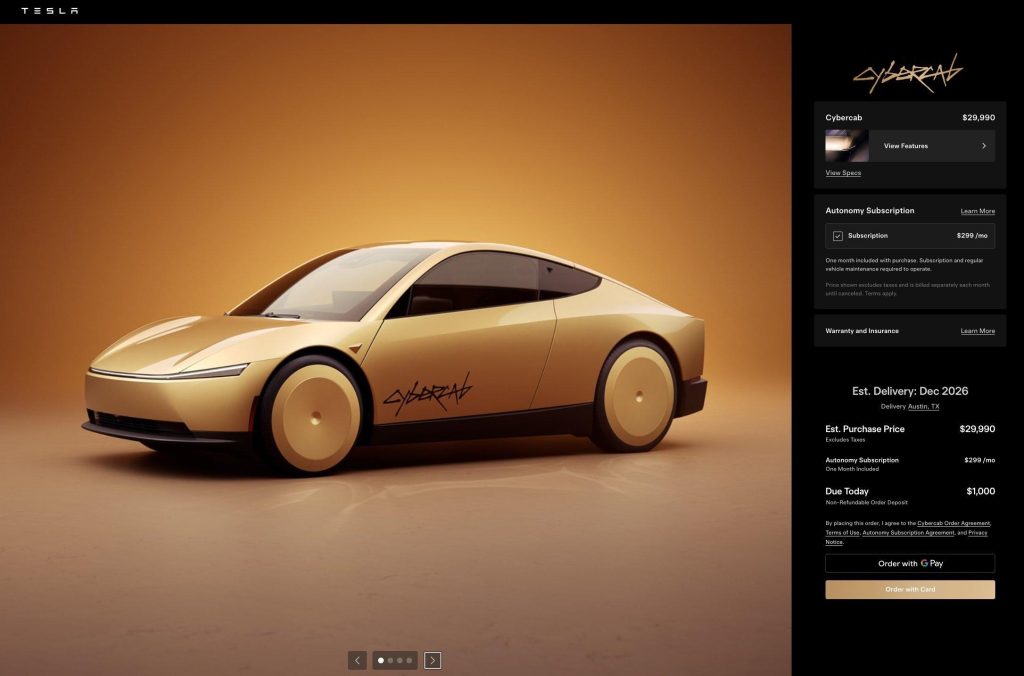
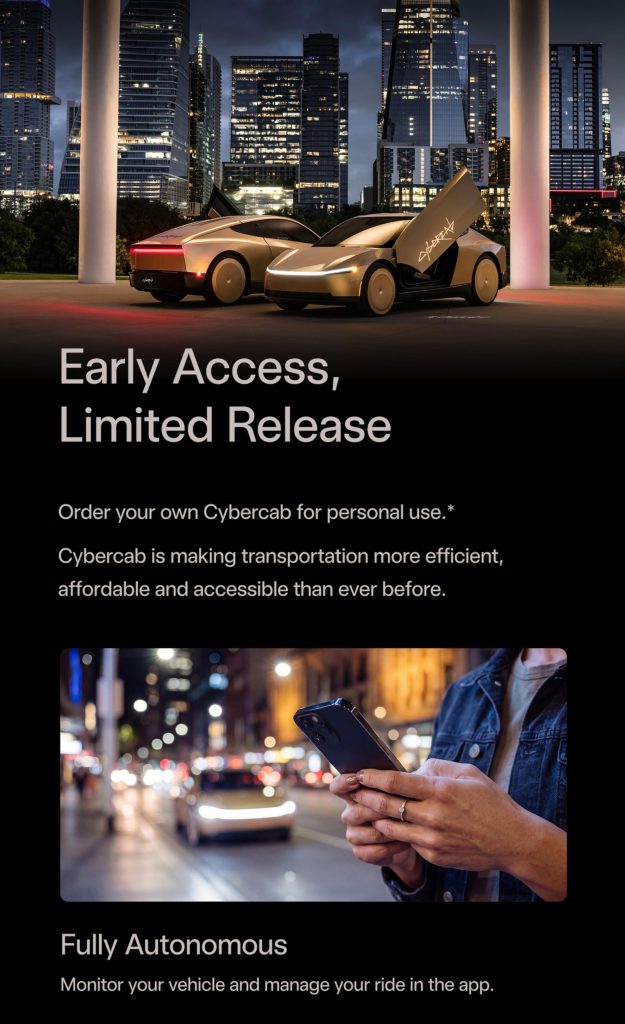
The invitation email makes clear that supply is small. “Initial availability is limited,” the email states, so the offer is unlikely to put a large fleet of privately owned Cybercabs on public roads soon.
Where the Cybercab fits in Tesla’s robotaxi fleet
Tesla began offering rides in the Cybercab as part of its Model Y-powered Robotaxi service in Austin in September. According to the crowd-sourced Robotaxi Tracker, Tesla now has 278 Cybercabs in operation, which represents about 40 percent of its fleet.
Elon Musk first introduced the Cybercab in 2024 and promised a vehicle priced around $30,000 that regular owners could drive without a human at the wheel. Musk did not mention a subscription at that event. Tesla already charges $99 per month for its Full Self-Driving feature, so a recurring fee for the Cybercab is less surprising to some observers, though the $299 figure is three times that amount.
What the subscription adds to the real cost
Over a standard five-year ownership period, the $299 monthly fee adds $17,940 to the sticker price, including the first month that is already covered. That brings the baseline cost to roughly $47,600 before taxes, charging and insurance. A new Model 3 or Model Y, which can be driven anywhere in the country, costs less than that figure.
The subscription also determines whether the car can be used at all. Canceling the Autonomy Subscription leaves the Cybercab unable to operate on public roads because the vehicle has no manual fallback. A standard Tesla keeps working as a regular car if a buyer cancels Full Self-Driving, but the Cybercab would effectively become immobile.
Commercial use restrictions in the Tesla Cybercab order terms
Musk’s 2024 pitch centered on the idea that owners could add their Tesla Cybercab to the company’s Robotaxi network and earn passive income. The order terms prohibit that. Owners cannot use the vehicle for commercial purposes, which rules out ride-hailing apps such as Uber, delivery platforms such as DoorDash, and placing the car on Tesla’s own Robotaxi network to offset the subscription.
Tesla AI chief Ashok Elluswamy has floated the second quarter of 2027 as a possible target for letting customer cars join the network. Until then, early buyers would pay the full monthly fee without a way to earn money from the vehicle.
On X, Musk said the offer would expand to a much wider rollout, subject to “regulatory approval.” He also called the $299 Autonomy Subscription “too high” and argued that it should be closer to $115 per month or near the $99 Full Self-Driving price. Separately, Musk responded to YouTuber Marques Brownlee, who promised to shave his head if Tesla delivered a Cybercab for under $30,000 before 2027.
Regulatory and insurance questions around the Tesla Cybercab
The offer raises unresolved safety and legal questions. The Cybercab does not comply with current Federal Motor Vehicle Safety Standards, which require traditional controls such as steering wheels and pedals. Tesla says the Autonomy Subscription covers autonomous driving, maintenance and towing, but it explicitly excludes auto insurance.
Tesla has not explained how personal auto insurers would underwrite a car with no human driver. It has also not said how liability would be divided between the owner and Tesla if the vehicle causes a crash while operating autonomously. The company has not disclosed how it chooses invited buyers or how many units are reserved for private sale compared with its internal fleet.
The National Highway Traffic Safety Administration has opened a formal audit into how Tesla self-certified a vehicle without a steering wheel, pedals or side mirrors. Tesla submitted its legal justification to the agency in October and asked that the full response be kept confidential. The company is taking customer deposits while the agency’s ruling is still pending.
For now, early buyers would be paying $47,600 over five years for a geofenced vehicle they cannot drive themselves or use commercially, and they would be putting down non-refundable money before the federal government has decided whether the car can be used on public roads.