

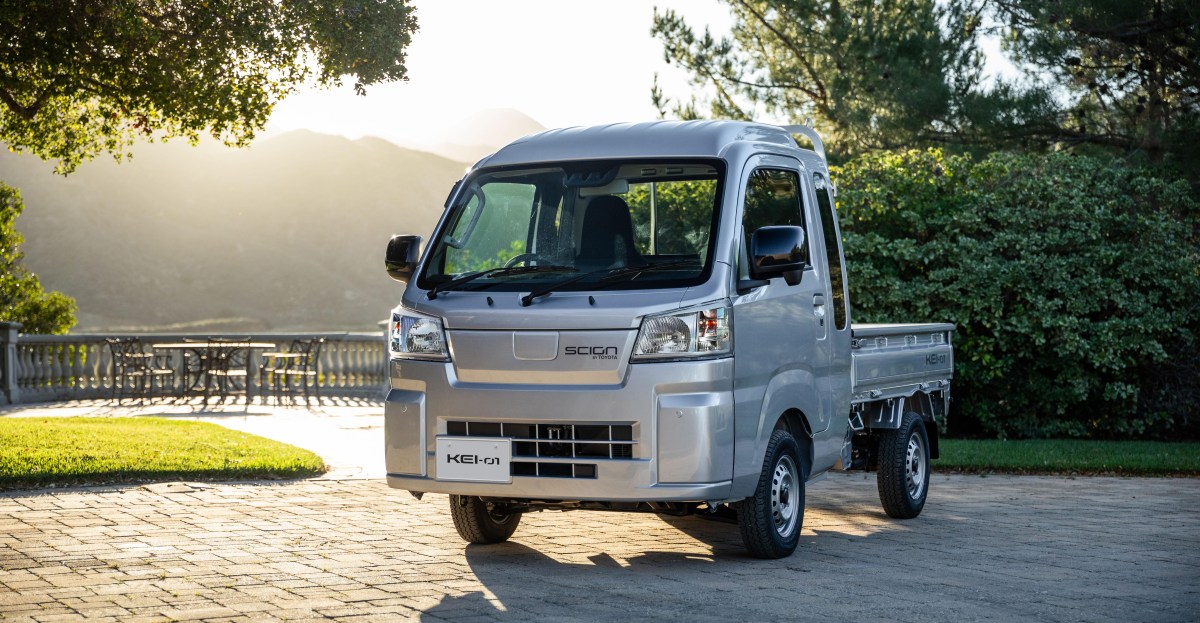
Toyota is bringing back the Scion name for a very different purpose. The Scion KEI-01 is a small, American-built kei truck that will be assembled in Indiana, and it marks the first vehicle from “Scion by Toyota,” which the company is positioning as an experimental mobility incubator rather than a maker of youth-market hatchbacks.
Why kei trucks are gaining ground in the US
Kei vehicles are built to meet Japan’s light vehicle regulations, and they have become popular well beyond Japan. More than 30,000 used kei trucks have been imported into the United States since 2020, with roughly 7,500 units entering the country each year. President Trump has also expressed support for the category, telling reporters last year that he had authorized the Department of Transportation to approve their production.
Toyota appears to be the first major automaker to test whether American buyers want these tiny trucks. The Scion name was discontinued in 2016, and reviving it suggests Toyota is aiming at younger car buyers. Toyota says it sees Scion as a testing ground for utility, outdoor adventure and customization, areas that do not easily fit its other models.
Engine, size and the Scion KEI-01 design
The Scion KEI-01 uses a 660cc three-cylinder gas engine paired with a continuously variable transmission. The setup is aimed at stop-and-go driving and fuel efficiency rather than speed. At roughly 11 feet long and under 5 feet wide, the truck has about half the footprint of a full-size pickup, which lets it fit through narrow alleys, barn aisles, garden gates and campus paths where standard trucks cannot go.
The Scion KEI-01 includes an on-demand four-wheel-drive system with a push-button locking mode. Power can be split to all four wheels on muddy farm ground, gravel work paths or wet slush, helping the truck avoid spinning out or getting stuck. Toyota has not disclosed trim levels yet, and the interior uses a lot of black plastic with few premium materials. Toyota has not said where pricing will land, although Japanese imports typically sell for between $6,000 and $12,000.
Cargo capacity and the Low-Speed Vehicle rules
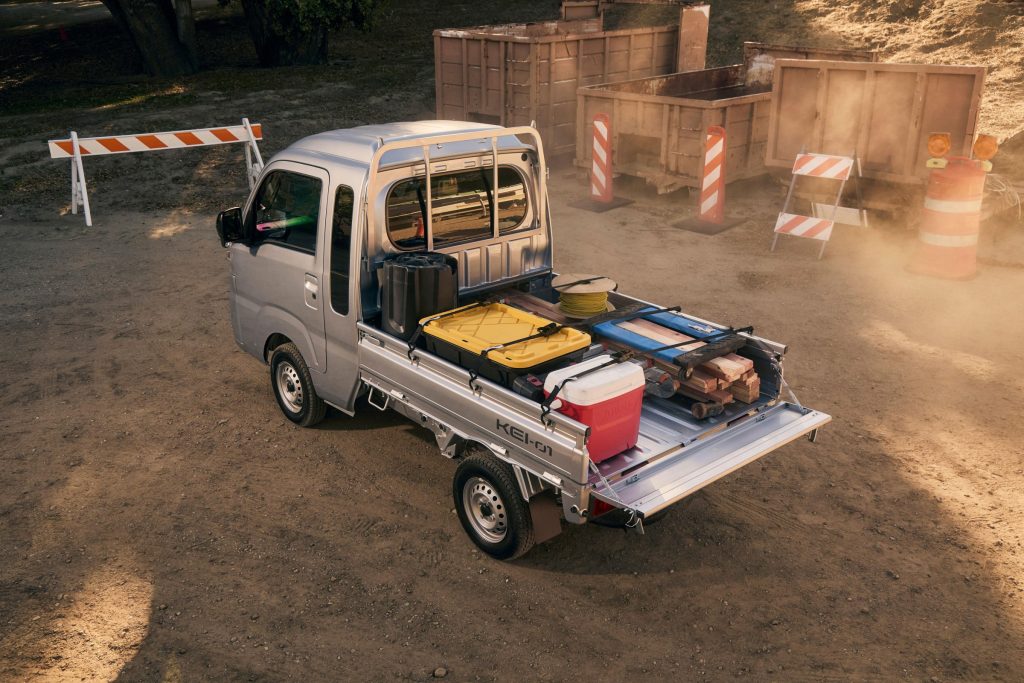
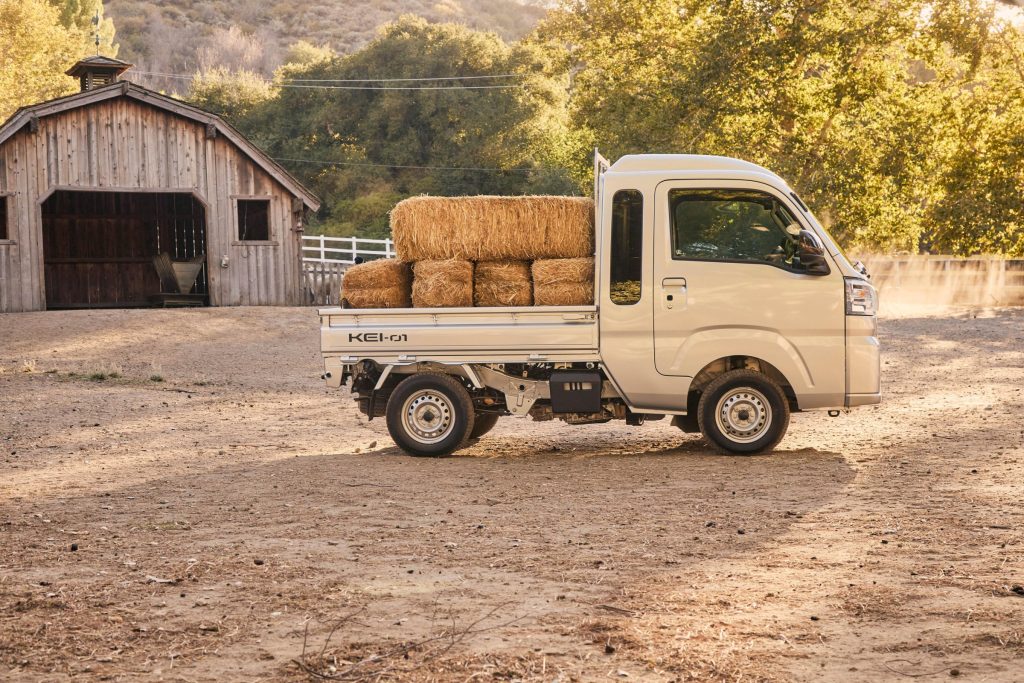
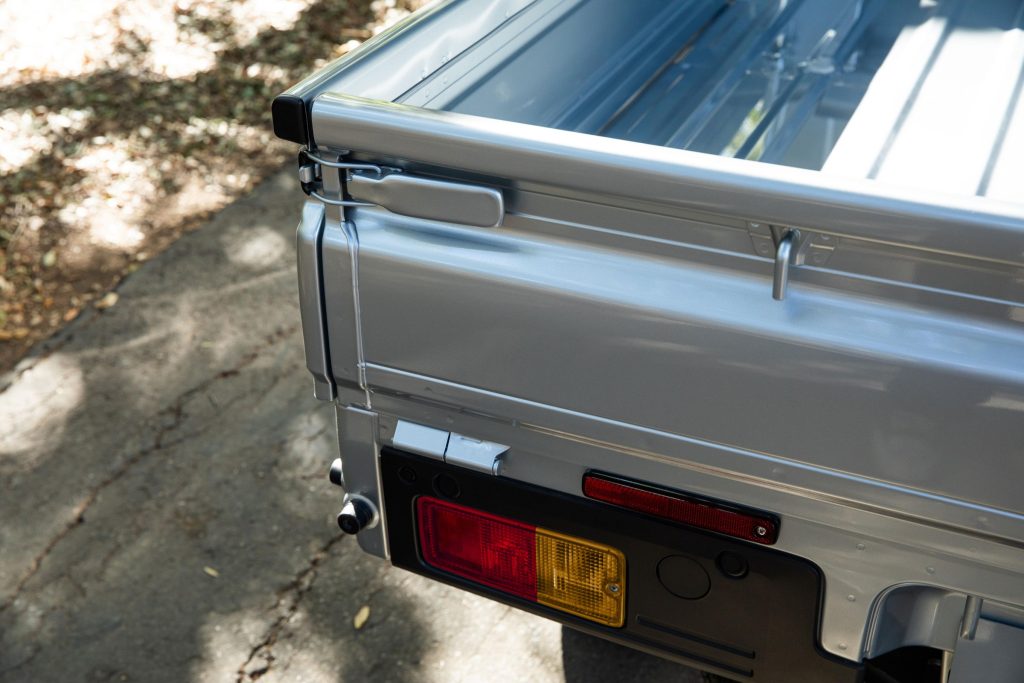
The Scion KEI-01 is certified under federal Low-Speed Vehicle (LSV) rules, the same category used for golf carts and similar vehicles. That certification caps its top speed at 25 mph. The truck bed has three sides that fold completely flat, so owners do not have to lift cargo over high metal sides. The bed can hold up to 600 pounds of soil, tools or gear, and the truck can tow small utility trailers and mowers.
Unlike an open utility cart or ATV, the Scion KEI-01 has a fully sealed cabin with heating and air conditioning. The extended roofline adds headroom, and the seats recline. Storage sits behind the seats to keep tools dry and secure. The steering wheel is on the right side, in keeping with classic Japanese utility imports. Toyota also points to easier curbside delivery and quicker access to sidewalks and worksite shoulders.
Indiana production and a fleet-first rollout
To meet US rules for auto manufacturing, Toyota is investing $34 million in its Princeton, Indiana plant to set up local assembly of the Scion KEI-01. The investment is expected to add roughly 50 jobs. Production begins in the second half of 2027.
Everyday drivers will not be able to buy one right away. Scion by Toyota is launching the truck as a fleet-focused pilot aimed at corporate campuses, farms, municipalities and local delivery operators. A specialized group of existing Toyota dealerships will handle the sales. Toyota says it may consider opening sales to retail customers later if demand justifies it, but for now the rollout is designed to test real-world US utility.
Two concepts point to Scion’s wider plans
The Scion KEI-01 appeared alongside two adventure-themed concepts that suggest the brand’s new focus extends well past budget hatchbacks. The SxS Concept uses a hybrid turbo setup producing more than 300 horsepower for high-speed off-roading. The modular BKE Concept explores compact personal mobility. Together, the vehicles point to a Scion lineup built around niche utility and experimental recreation. Toyota has not said whether either concept will reach production.