

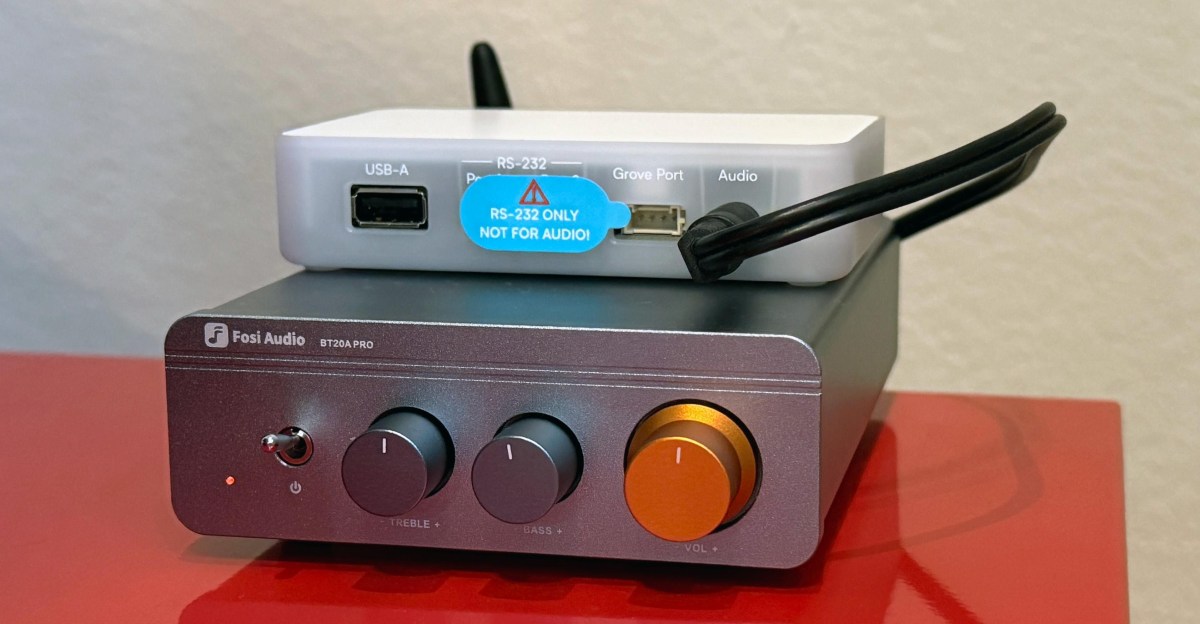
Nabu Casa, the commercial arm of the Open Home Foundation that runs Home Assistant, has launched the Home Assistant Connect Aux-2. The $69 box is designed to bring more devices into a smart home setup, and it is part of the company’s effort to make the open-source platform easier to use.
Ports and hardware specs
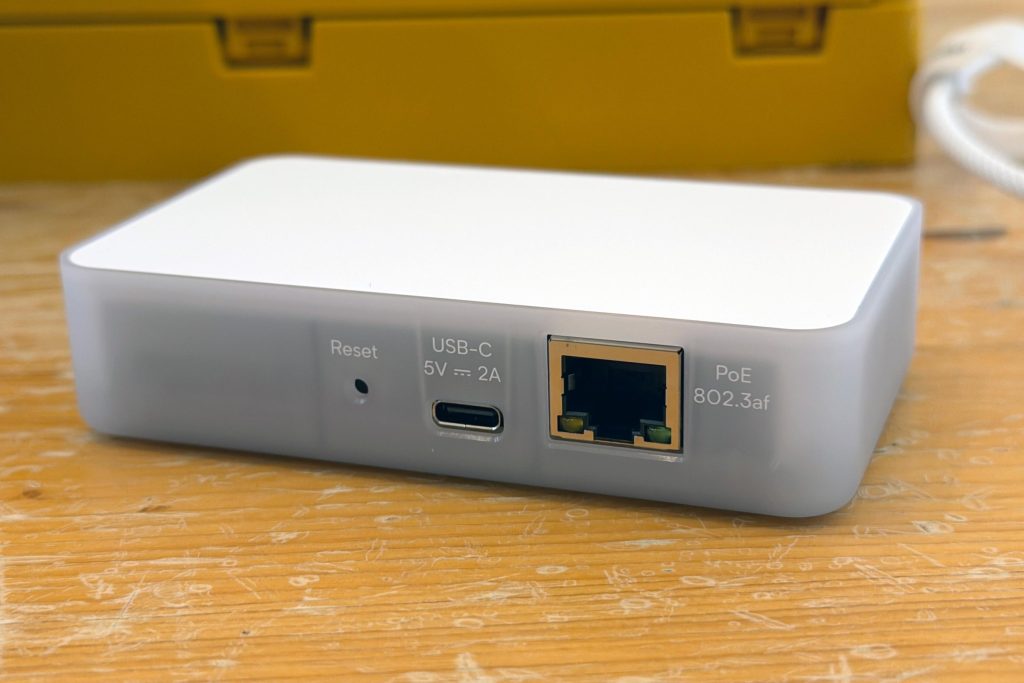
The Aux-2 is about the size of a deck of cards. It includes 2.4GHz Wi-Fi, Bluetooth, Ethernet, USB-A and USB-C ports, a digital/analog audio jack and a Grove port for connecting peripherals such as sensors, buttons and LEDs. It also has a pair of RS-232 serial ports.
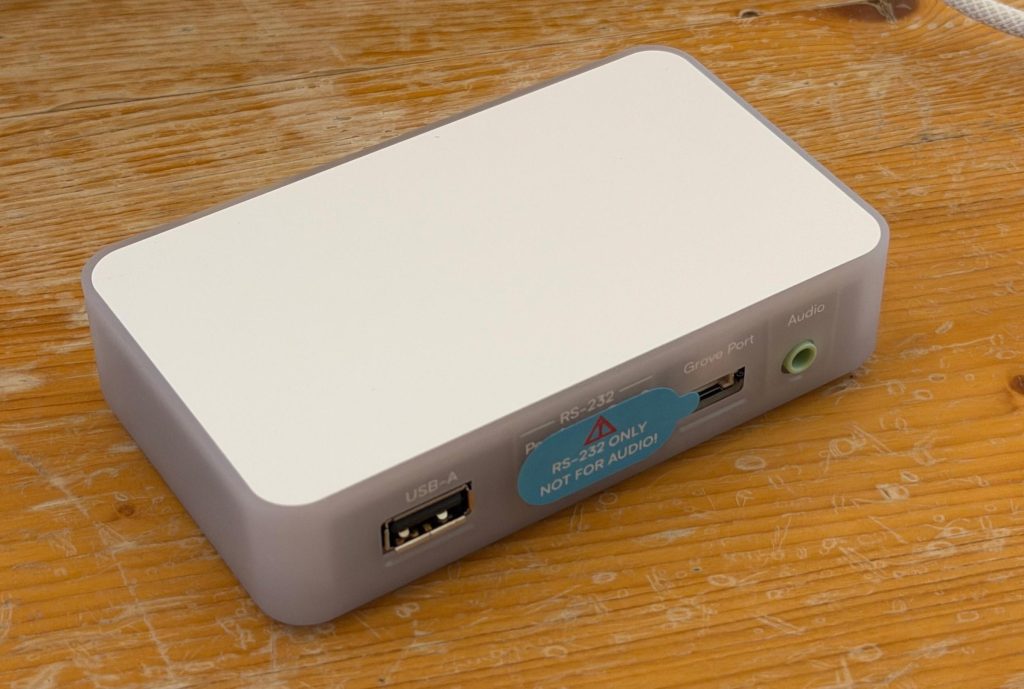
Each port has a specific job. The Bluetooth radio can bridge Bluetooth devices into a Home Assistant setup, which lets Bluetooth sensors report to the hub without it being placed nearby. The USB port accepts a Nabu Casa Z-Wave or Zigbee antenna, which is useful when the main Home Assistant hub sits in a spot with poor wireless reach.
Controlling TVs, receivers and audio gear
The serial ports can control devices such as TVs, AV receivers and solar inverters. The audio jack can connect to an amplifier or powered speakers, which allows music to be streamed to older audio equipment that has no network connection of its own.
The Aux-2 relies on existing Home Assistant and ESPHome integrations for all of these features. It is based on ESPHome, an open platform for building DIY smart home devices from low-cost ESP boards. The serial integration was developed earlier this year. Music Assistant and Sendspin, which power the audio output feature, are still in active development.
Bringing the Aux-2 into your home assistant setup
Setup starts with a USB-C connection to a computer. The firmware can be downloaded and installed from a browser, and Wi-Fi credentials can be entered at the same stage. After that, the box is moved to its final location and powered by USB-C or by power over Ethernet, and the rest of the setup happens in the Home Assistant interface.
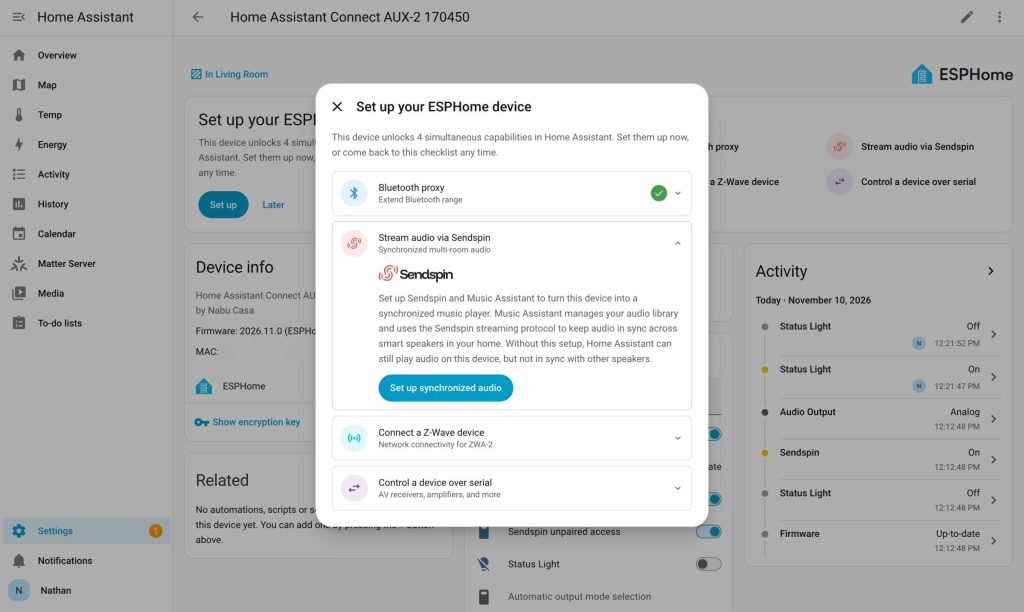
Home Assistant prompts users to install ESPHome, which discovers the Aux-2 and opens a setup page listing its capabilities. Enabling Bluetooth proxying takes only a couple of clicks. In early hands-on testing, users who added the Govee Bluetooth integration found that their sensors appeared automatically once batteries were installed. The sensors stayed connected through three walls and a refrigerator, according to the tester’s account.
Audio setup and what is still in development
Audio took longer to configure, mainly because it requires Music Assistant. That platform runs on the Home Assistant hardware and can play music from services such as Spotify and YouTube Music, as well as local files. It can send that audio to outputs including Sonos, Wiim, AirPlay and Google Cast devices, but each of these must be configured separately. In early testing, the full audio setup took less than half an hour.
Sendspin, the whole-home audio standard also developed by the Open Home Foundation, is designed to group speakers from different protocols under certain conditions. Early testers reported that this grouping did not work yet, and the standard is still being developed. Testers also said they would like the Aux-2 to appear as an AirPlay or Spotify Connect target.
How it compares with cheaper ESP-based options
Serial control is the feature that stands out most, but early reviews have not yet fully tested it. Users who have tried it so far have not published results for the serial connections to TVs or solar inverters.
The Aux-2 does not offer functions that a builder could not already create with an ESP32 board and accessories. The Apollo Automations Cast-1 costs $35 and supports the same music casting and Bluetooth proxy features. A DIY build using cheaper parts could cost even less. Nabu Casa and Apollo both fund the Open Home Foundation, which develops Home Assistant and ESPHome, and both sell hardware that is easier to set up than a homemade build.
For buyers, the Aux-2 fits people who want a supported, ready-made box for Bluetooth proxying, Z-Wave or Zigbee antenna placement and audio output without building their own hardware. Users who are comfortable with DIY projects can achieve similar results for less, using ESP32 boards and a handful of accessories. The Aux-2 is available now from Nabu Casa at $69, and the Sendspin grouping and serial control features are expected to mature as their development continues.