

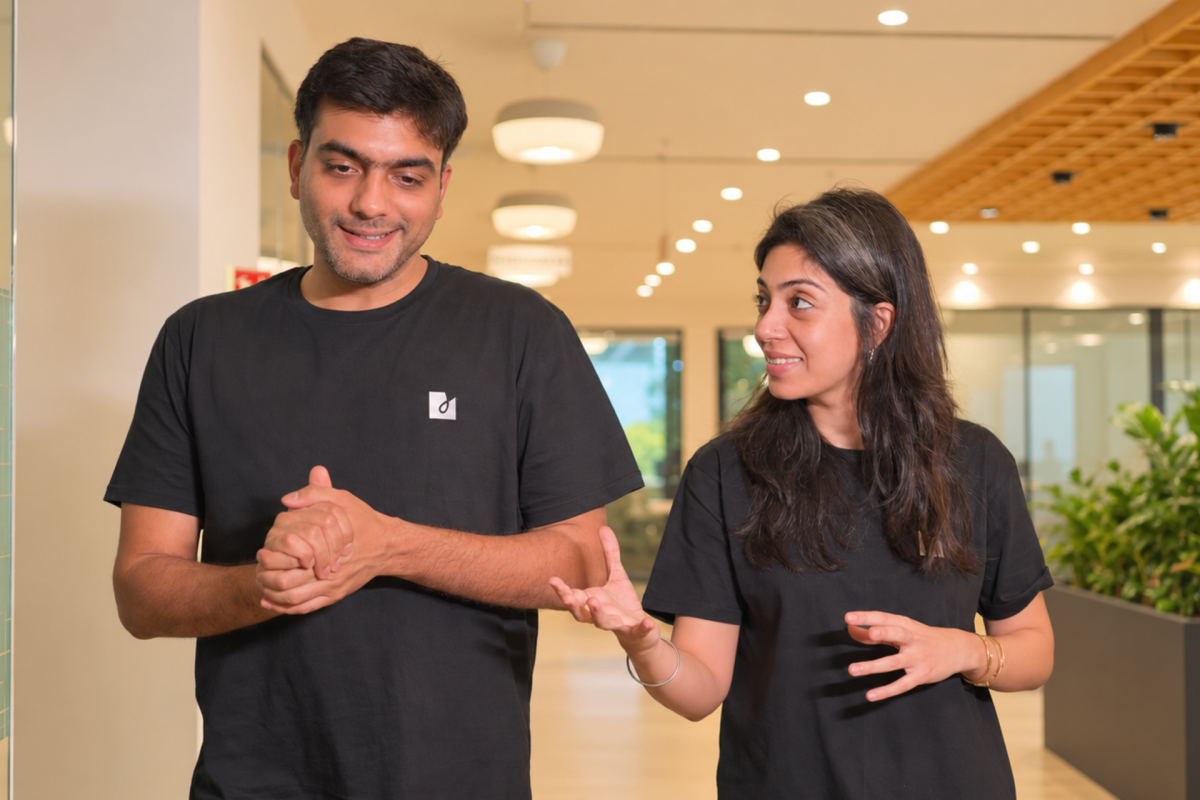
Bharat Semi, an Indian semiconductor startup, has raised $24 million in seed funding to develop AI-enabled image sensors. The New Delhi-based company says it is seeking customers in the United States and elsewhere, even though its products are still in development.
Bharat Semi seed round and investors
The all-equity seed round was led by Info Edge Group, South Park Commons and Indus Bridge Ventures. Valour Capital, Micromax, Gaingels and several individual investors also took part. The company said it will use the money to expand its engineering team, complete product development and bring its sensors to market.
The startup is nearly five years old and has not yet generated revenue. It says it has already won design wins with General Atomics, a U.S. defense technology company, and Kaynes Semicon, an Indian chip firm. Those wins show interest from customers, but the sensors themselves have not reached commercial production.
Programmable sensors that process data on the chip
Bharat Semi is building programmable image sensors that combine image capture, processing and AI functions on a single chip. Conventional camera systems typically use a separate image sensor, an image signal processor and a system-on-chip. Sending visual data between those parts adds cost and power draw.
Co-founder Vrinda Kapoor said that putting these functions on one chip could cut system costs by at least 70% compared with conventional setups. The approach also reduces the need to send raw visual data to other processors. Kapoor described the company’s goal in an interview with TechCrunch. “Our aim here is to move from sensors to sense-making solutions,” she said.
The idea is to let a device interpret what it sees locally, rather than passing every frame to a larger computer. That matters for battery-powered and low-cost devices, where extra hardware can be too expensive or too power hungry.
Target markets and product timeline
Bharat Semi is targeting smart homes, industrial automation, surveillance and aerospace. Without disclosing specifics, Kapoor pointed to air conditioners that could detect when a room is empty and adjust automatically. She also described drones that could process visual information without more expensive computing hardware elsewhere in the system.
The company’s first-generation sensors are already in prototyping. Its second-generation sensors will add more advanced AI capabilities and are expected to reach the prototype stage by mid-2027, Kapoor said. The startup plans to get those newer sensors into customers’ hands by the end of 2027.
The first commercial production is targeted for 2027, which means the company has no shipping products yet. Buyers evaluating the chips will need to wait for working samples and the results of design wins before they can judge performance.
Team, US operations and hiring plans
Kapoor co-founded Bharat Semi in late 2021 with Vinayak Dalmia, the company’s managing director. Kapoor is a South Park Commons fellow who previously worked in healthcare technology. Dalmia previously worked at McKinsey and in private equity. The chief technology officer, Boyd Fowler, held the same role at image-sensor maker OmniVision.
The company has about 75 employees across India and the United States. Ten to 12 of them work in American operations, which include engineering and business development in Santa Clara, California. Bharat Semi plans to increase its U.S. headcount to around 20 by mid-2027. It has also started hiring engineers in Europe.
Kapoor framed the company’s ambitions in global terms. “It’s a story of can we build a global technology company out of India,” she said.
Fabrication plans and fabless strategy
In 2024, Bharat Semi announced plans for a semiconductor fabrication project in India, with a technology partnership involving the U.S. Space Force. Kapoor said that project is still in development. The startup is now looking for domestic partners that would build and operate the facility.
Kapoor said the fabrication project is separate from the image-sensor business. Bharat Semi plans to remain fabless, meaning it will outsource chip manufacturing and focus on chip design and software. The new seed funding will not be used to finance the proposed fabrication facility.
India has committed billions of dollars to build a domestic semiconductor industry, hoping to become an alternative manufacturing hub as U.S. companies look to diversify supply chains beyond China. The country has not yet become a major chip manufacturing hub. The AI boom has opened a door for Indian startups such as Bharat Semi to design specialized chips for global markets, and the company’s next milestone is the second-generation prototype expected by mid-2027.