

Bambu Lab has launched the Bambu P3C at $1,149, a lower-priced multi-material printer that keeps many of the features of its flagship H3C while cutting several corners. The Bambu P3C is priced at $1,149, £999 and €1,149, roughly half the $2,499 that Bambu asked for the H3C when it was introduced three weeks ago.
Like the H3C, the new printer can swap between materials on the fly. It can mix colors to produce much of the rainbow, combine soft and hard materials, and mix different nozzle sizes and filament diameters so users can switch between fast printing and fine detail within a single print. Early hands-on impressions suggest the trade-off lies mainly in how the machine is set up and loaded.
How the Bambu P3C compares with the H3C
The P3C uses a 256 x 256 x 260mm print area, similar to Bambu’s other P-series printers. It supports seven automatically swapping tools, two fewer than the nine on the H3C. Even so, seven is a large number for the price. The $849 Snapmaker U1, another toolchanger, typically offers four.
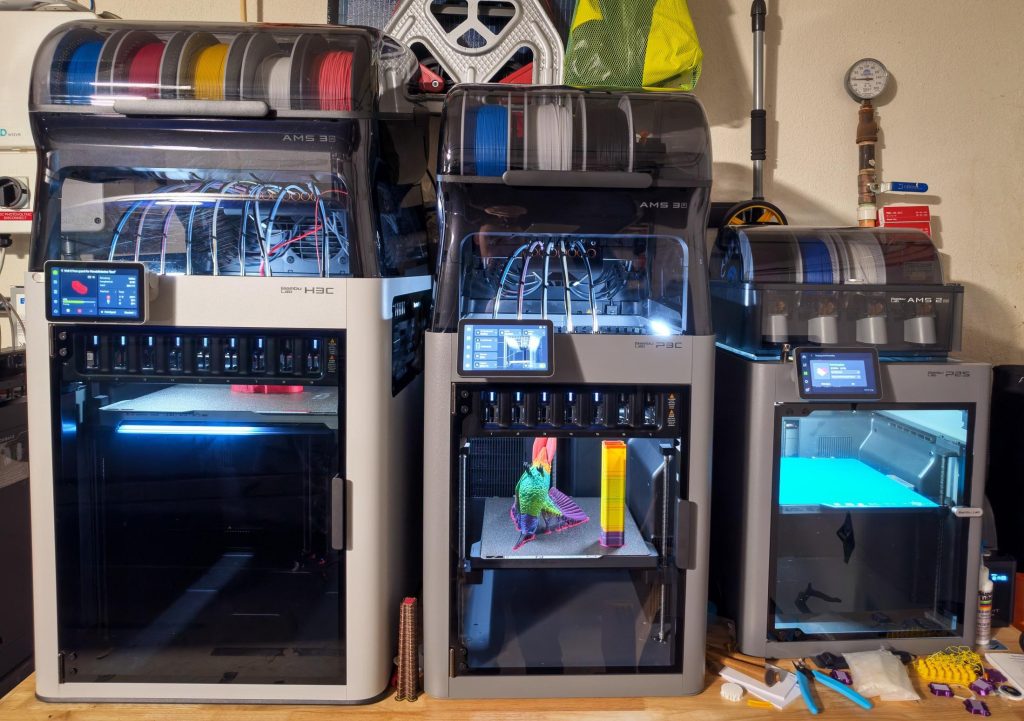
The P3C does not arrive fully loaded, and it does not load filament by itself. The machine has slots for seven rolls of filament and up to seven independent tools. Those tools can include thicker 2.85mm filament, pens, cutting blades, and debossing and foil transfer tools that let the printer work like a Cricut. Out of the box, though, it comes with only five 0.4mm print nozzles.
Manual loading is the biggest change
The P3C’s automated material system, known as AMS, is the first Bambu AMS to ship without motors that load filament automatically. Bambu’s $800 P2S Combo, which early reviewers have pointed to as the more practical choice for most buyers, offers four colors, so the P3C’s five ready nozzles are one more color than that machine provides.
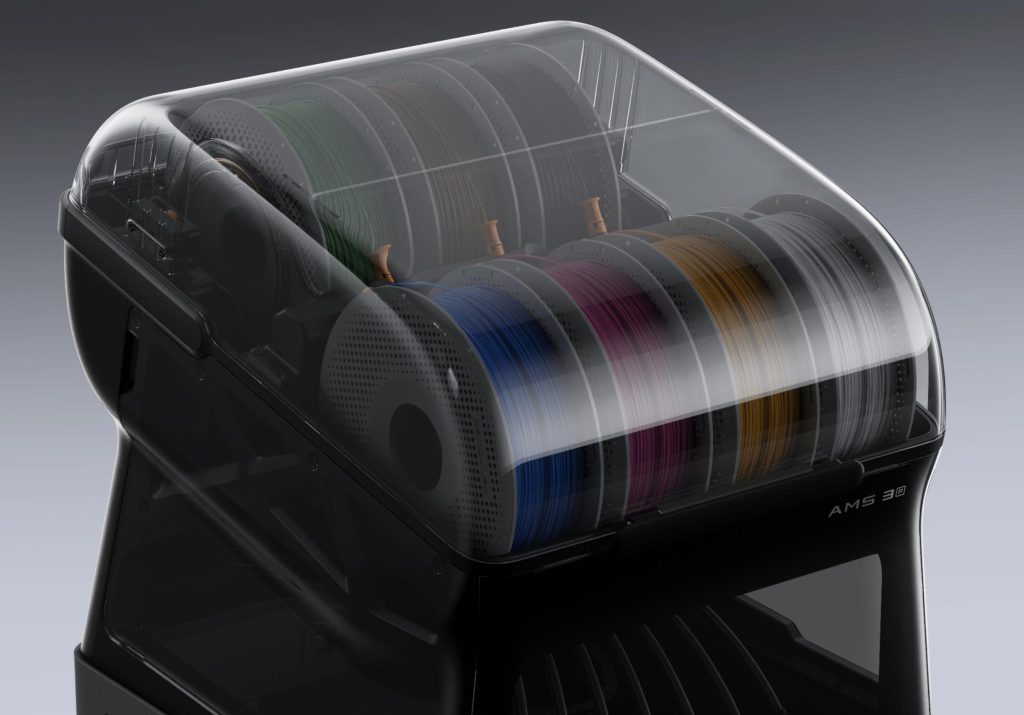
Loading the nozzles is a slow process. Users must wait for each nozzle to preheat, then push a length of filament down a tube by hand. Early impressions describe the process as a step backward after years of using motorized versions of Bambu’s AMS. The P3C does not need to purge filament between colors the way the P2S does, which offsets some of the cost of manual loading. Two more printheads can be added for up to $100 each.
Color mixing results and workarounds
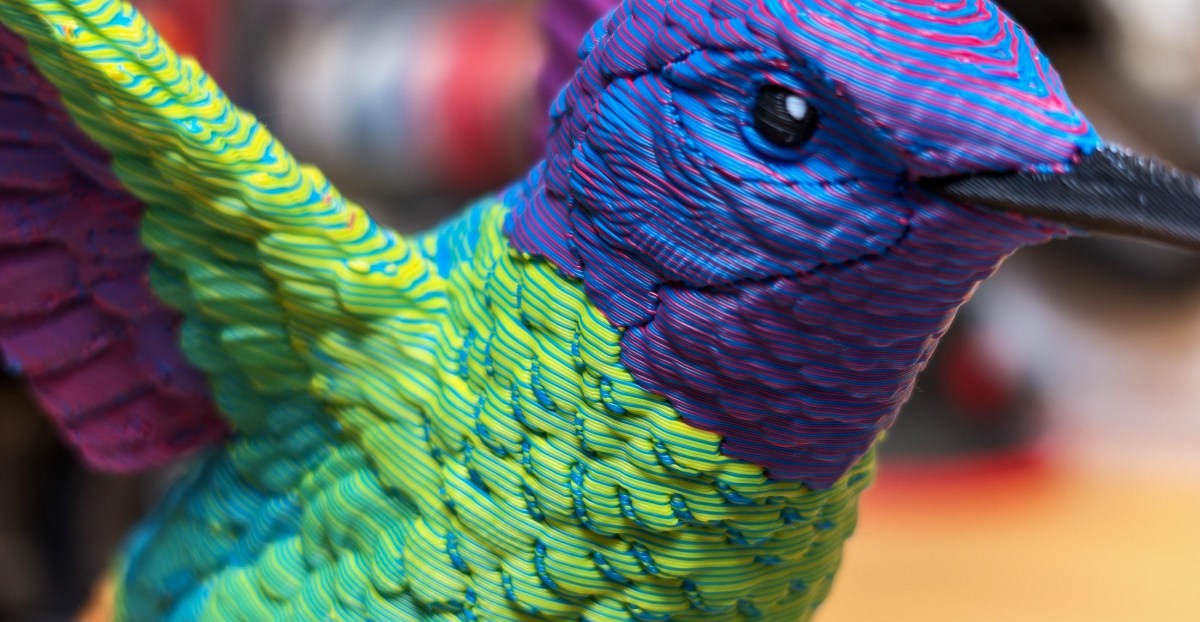
Five nozzles are enough to load Bambu’s “PLA Palette” cyan, magenta, yellow, black and white (CMYKW) filaments for color mixing. The company’s new hummingbird test print came out almost flawlessly on the first attempt in early testing. Color mixing is not a reliable way to produce every shade, however. A brown tree branch intended as the hummingbird’s perch was difficult to replicate, and manually swapping a roll of brown filament is a time-consuming fix.
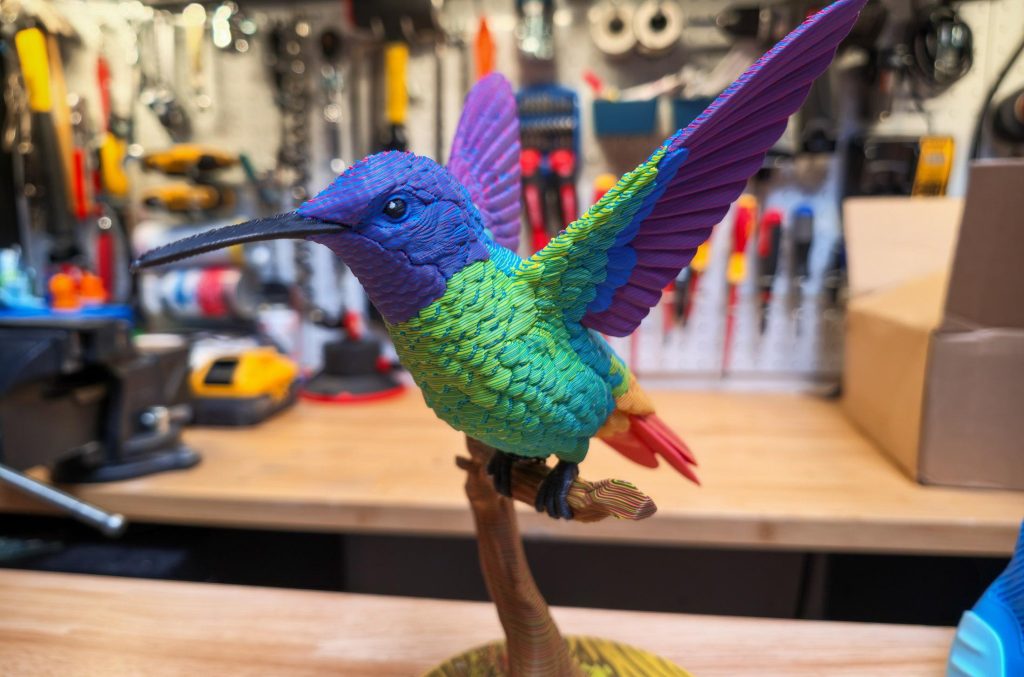
Bambu suggests a feature called “mixed color sublayer” for better results with such colors. Users can also connect a standard motorized AMS to one of the P3C’s printheads, which the company supports. Those options point to a machine that rewards experimentation more than a plug-and-print workflow.
Bambu’s explanation and what comes next
Bambu spokesperson Karlie Hou defended the decision in a statement. “The AMS 3P’s design deliberately omits the auto-loading feature as part of the effort to offer premium multi-head performance at roughly half the price of the flagship H3C system.” The statement says the goal is to reach hobbyists, small studios and educational institutions.
Bambu says manually reloading five nozzles takes around five minutes. The company plans a future software update that would cut the hands-on time for loading five spools to under one minute. Bambu has not provided a date for that update, and the target is ambitious for a fully manual process. Long-term reliability also remains an open question, including whether filament stays dry when left in the printheads for extended periods.