


The BADBOX 3.0 botnet has returned after last year’s disruptions, generating a record 40 billion fraudulent advertising bid requests per day through infected Android-based devices. Researchers at HUMAN’s Satori team, who uncovered and disrupted the latest variant, said BADBOX 3.0 has grown into the largest documented ad fraud operation measured by daily bid request volume.
How BADBOX 3.0 became the largest ad fraud operation
BADBOX was first discovered in early 2023 on a T95 Android TV box bought on Amazon. In December 2024, Germany’s cybersecurity agencies warned that the botnet had infected tens of thousands of devices. The malware has been tracked through several generations since then, and each one has been larger than the last.
In March 2025, HUMAN and Shadowserver cut off more than 500,000 BADBOX 2.0 devices from their control servers. Google removed 24 apps that spread the malware from Google Play during the same operation. Google later sued the botnet’s operators, saying BADBOX 2.0 had infected over 10 million Android-based devices by April 2025.
Those disruptions did not stop the operators from rebuilding the network. BADBOX 3.0 set new records for daily fraudulent advertising bid requests. HUMAN said that at its peak, the botnet accounted for roughly 40 billion bid requests a day and more than 4% of all connected TV (CTV) traffic observed by its Human Defense Platform.
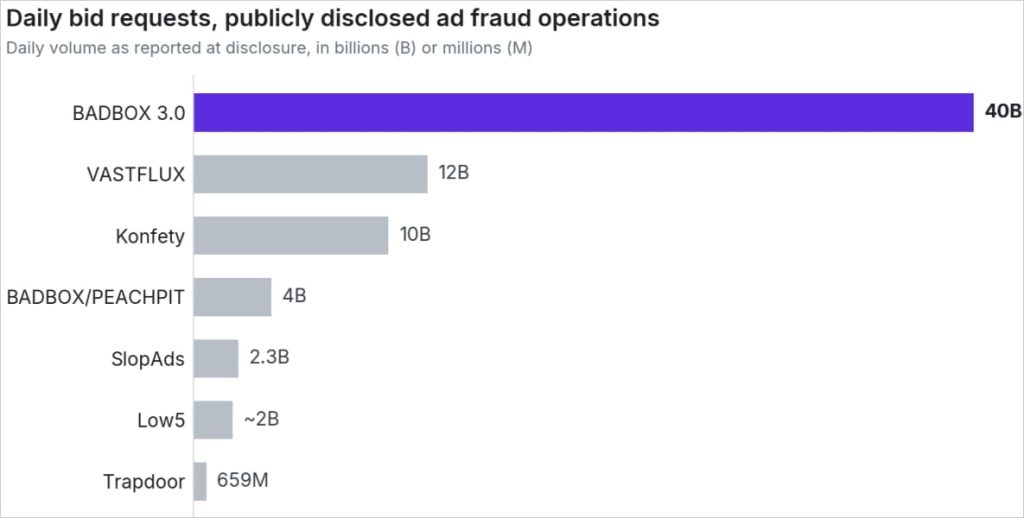
HUMAN said BADBOX 3.0’s volume was more than three times that of the previous record holder, VASTFLUX. The company also said the peak was larger than the total of five years’ worth of published Satori investigations combined. Other disclosed operations in the chart include Konfety at about 10 billion requests per day, BADBOX/PEACHPIT at about 4 billion, and SlopAds at 2.3 billion.

Infected devices and fake ad playback
The operators use the same basic method as before. They infect cheap phones, tablets and streaming TV boxes that run the Android Open Source Project (AOSP), a version of Android without many of the services found on Google-certified devices. Once infected, the devices run malware that performs ad fraud and traffic proxying.
The ad fraud component plays video ads in hidden windows. It also impersonates legitimate streaming apps so that its requests look genuine to advertisers and ad platforms. HUMAN also observed fraudulent server-side ad insertion (SSAI) requests. These made advertisers believe their ads had played on streaming devices, even though no actual device or video ad was involved.
A separate proxying module enrolled infected devices in one of 11 residential proxy networks without the owners’ knowledge or consent. Residential proxies route other people’s internet traffic through a home connection, which can make abusive traffic appear to come from ordinary households. HUMAN said some of the ad fraud traffic was also routed through these residential proxies to appear legitimate and evade anti-abuse filters.
PXYEDGE and the residential proxy network
One of those networks, PXYEDGE, was identified as the rebranded successor to IpMoYu, a residential proxy service previously linked to BADBOX 2.0. The researchers said PXYEDGE advertised approximately 200,000 proxy nodes. Their monitoring showed unique connections peaking at around 340,000, which suggests the number of devices actually in use was higher than the advertised figure.
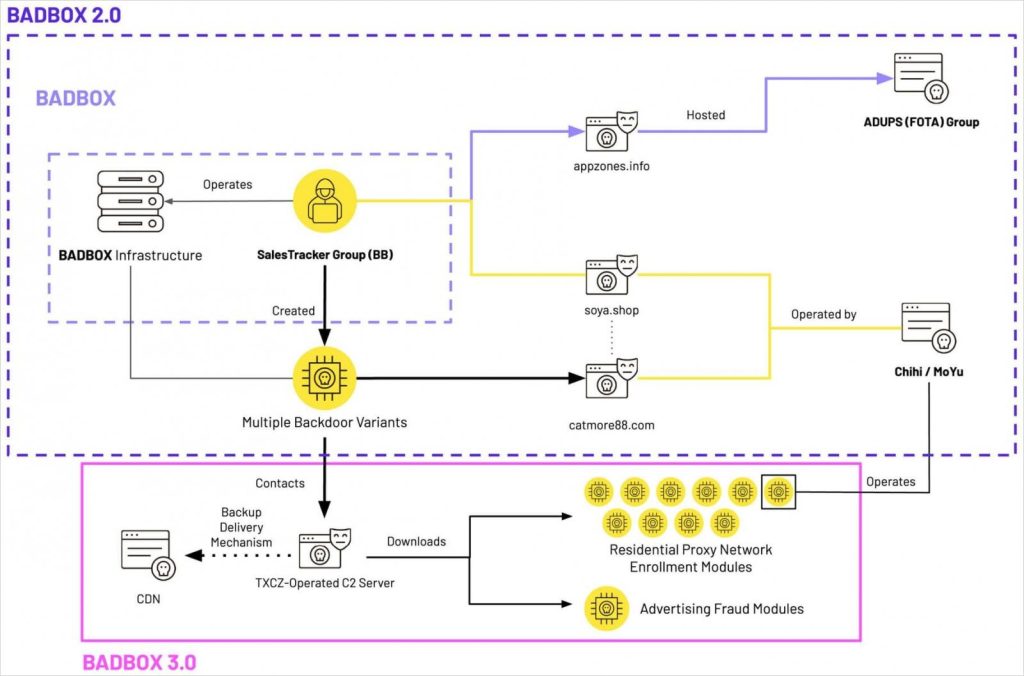
The infrastructure is also built to survive takedowns. The infected devices fetch malware modules from public code repositories. The same payloads are mirrored across various hosting platforms for redundancy, so removing one copy does not cut off the others. HUMAN said the modular design lets the operators swap components when one part is blocked.
Who is behind the malware and what comes next
The researchers linked the malware to a specific Chinese electronics manufacturer. The link rests on several points: the manufacturer’s domains, device-specific checks in the code, a factory-installed TV launcher and a repository maintainer. HUMAN did not describe any of these as proof of intent by the manufacturer itself.
HUMAN said it also took part in Google’s disruption of the related XCPE malware operation earlier this month. That action included taking down multiple command-and-control (C2) domains used by BADBOX 3.0. One malware repository was also taken down. HUMAN said its systems now filter fraudulent advertising traffic associated with BADBOX 3.0.
HUMAN warned that the botnet operators are likely to adapt to the latest disruption, as they have done in the past. For buyers, the company advised purchasing only certified Android devices from reputable manufacturers. It also recommended making sure Google Play Protect is available and active on Android devices, since a cheap unbranded TV box or phone may carry the malware out of the box.