

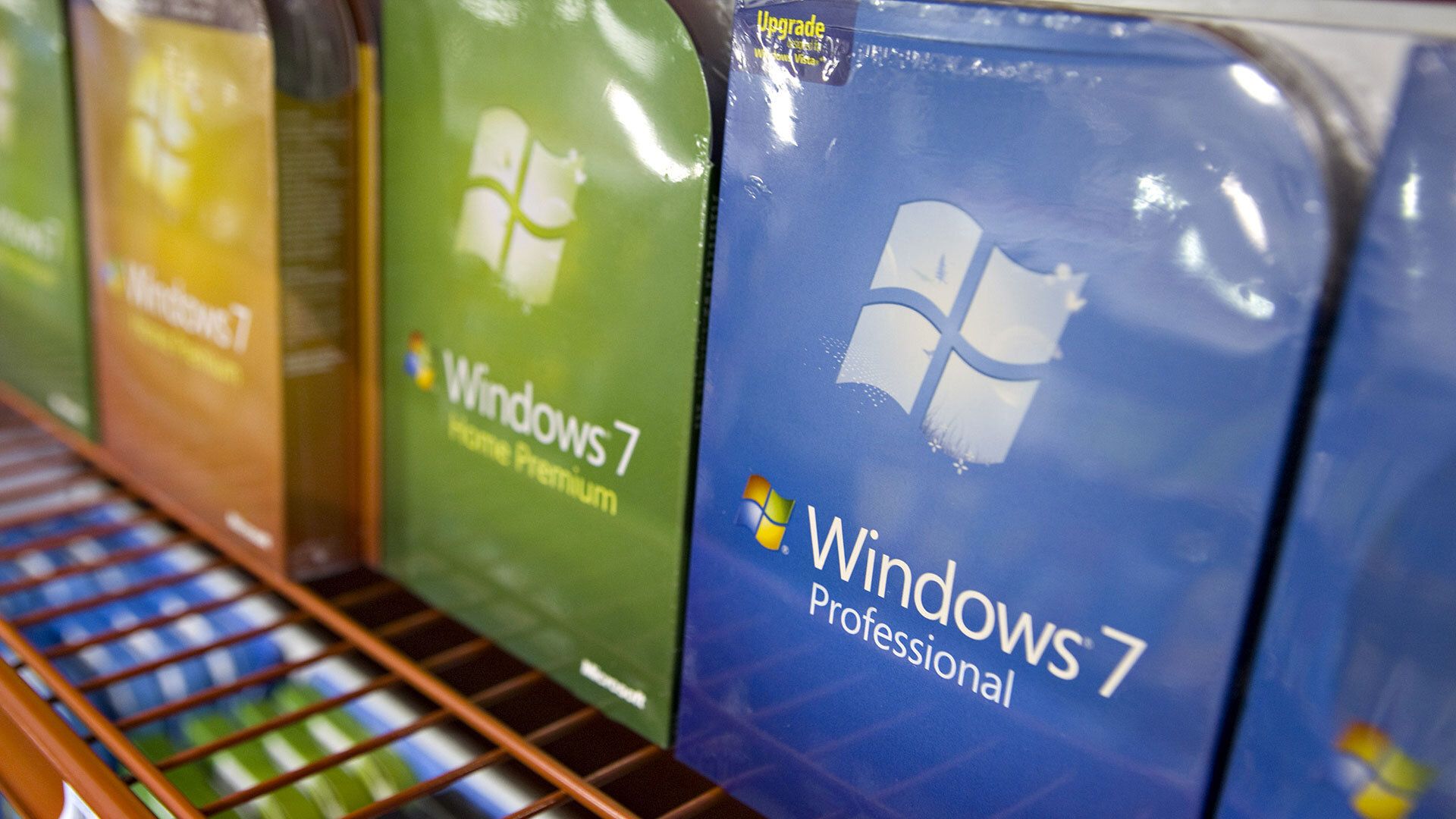
Windows 7 left official support years ago, but enthusiasts are still finding ways to bring modern hardware and features to Microsoft’s operating system. A new community project now allows Windows 7 to work with current Nvidia, AMD and Intel graphics cards, and it adds DirectX 12 and Vulkan 1.4 capabilities that the OS never shipped with.
How the Windows 7 graphics backport works
The project was developed by enthusiasts EAZY BLACK, kryptik and VisualEhrmanntraut. It backports WDDM 2.2, the Windows Display Driver Model, from Windows 10 to Windows 7. The display driver model is the layer that lets the operating system communicate with a graphics card, so updating it is the key step in supporting newer GPUs.
Windows 7 originally launched with WDDM 1.1. Microsoft introduced WDDM 2.0 with Windows 10 in 2015 and WDDM 2.2 with the Creators Update in 2017. Microsoft also released a limited version of DirectX 12 for Windows 7 in 2019, but that implementation was meant only for developers who wanted to port select games to the older operating system. It was not a general-purpose upgrade for users.
The new project goes further by bringing the newer driver model itself to Windows 7. Users can get the project files and modified drivers from the W7Revived website.
Supported graphics cards
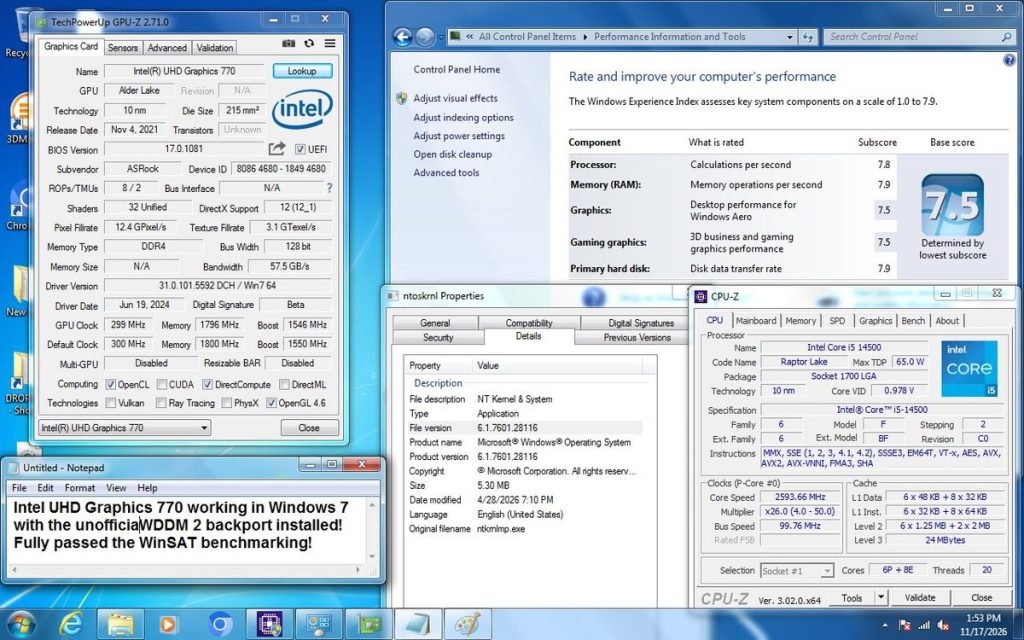
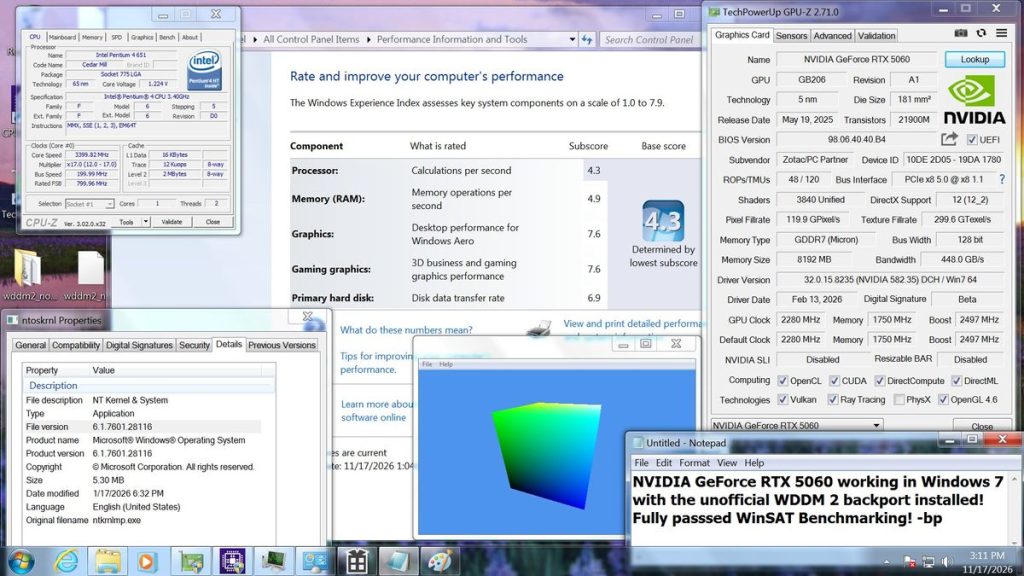
According to a post by @TheBobPony on X, Nvidia’s RTX 40 and RTX 50 series, AMD’s Radeon RX 7000 and RX 9000 series, and select Intel Arc graphics cards are supported. The same post shared screenshots showing an Intel UHD Graphics 770 and an Nvidia GeForce RTX 5060 running under Windows 7 with the backport installed.
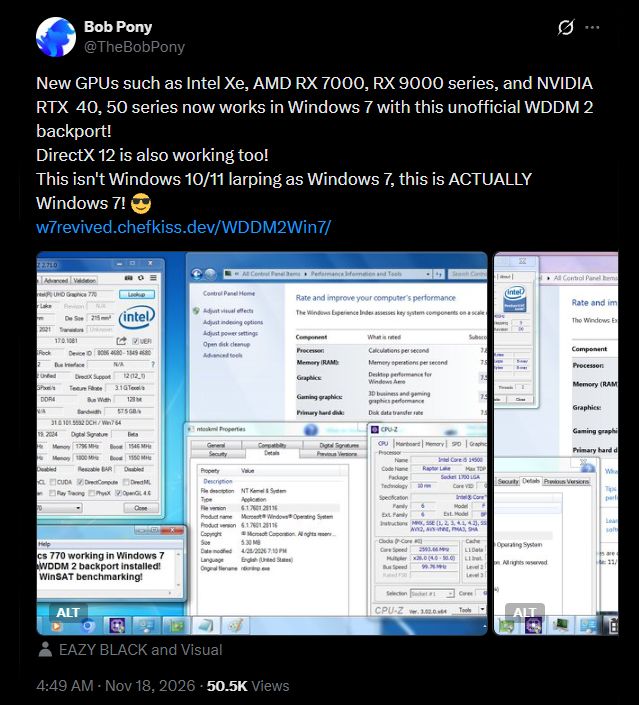
The screenshots show the GPUs recognized by Windows 7 and listed in third-party tools such as GPU-Z. The post also claims that ray tracing and DLSS work on compatible hardware. Older cards may benefit as well, including Nvidia’s RTX 30 series and AMD’s Radeon RX 6000 series.
Feature support, however, depends on three things: the graphics card, the driver implementation and the application. A feature listed as working on one card may behave differently on another, or in a specific game.
What this means for Windows 7 users
The project is aimed at people who still prefer Windows 7 or rely on older software and hardware that cannot be moved to a newer system. Extending the usefulness of an OS that no longer receives official updates is the main draw. Users who want to run newer Windows applications can also pair the project with the VxKex compatibility layer, which allows some newer Windows apps to run on older systems.
Windows 7 has a long history with PC enthusiasts. Released in 2009 as the successor to Windows Vista, it offered a familiar interface, solid performance and a straightforward desktop experience. It became one of Microsoft’s most popular operating systems and stayed a favorite among PC enthusiasts and everyday users long after Windows 10 arrived.
Performance compared with Windows 11
Performance has also kept the older system in use. In a comparison test on a modern PC with an AMD Ryzen 7 9800X3D, a Radeon RX 6950 XT and 64GB of DDR5 memory, Windows 7 was compared against Windows 11. The tests covered eight DirectX 11 titles and two DirectX 9 titles. Windows 7 delivered better performance in certain scenarios, particularly CPU-bound games, and posted stronger 1% lows in some titles.
The project is unofficial and is not supported by Microsoft or the GPU makers. Anyone installing it is working with community-modified drivers, so the results will vary from one PC to another.