

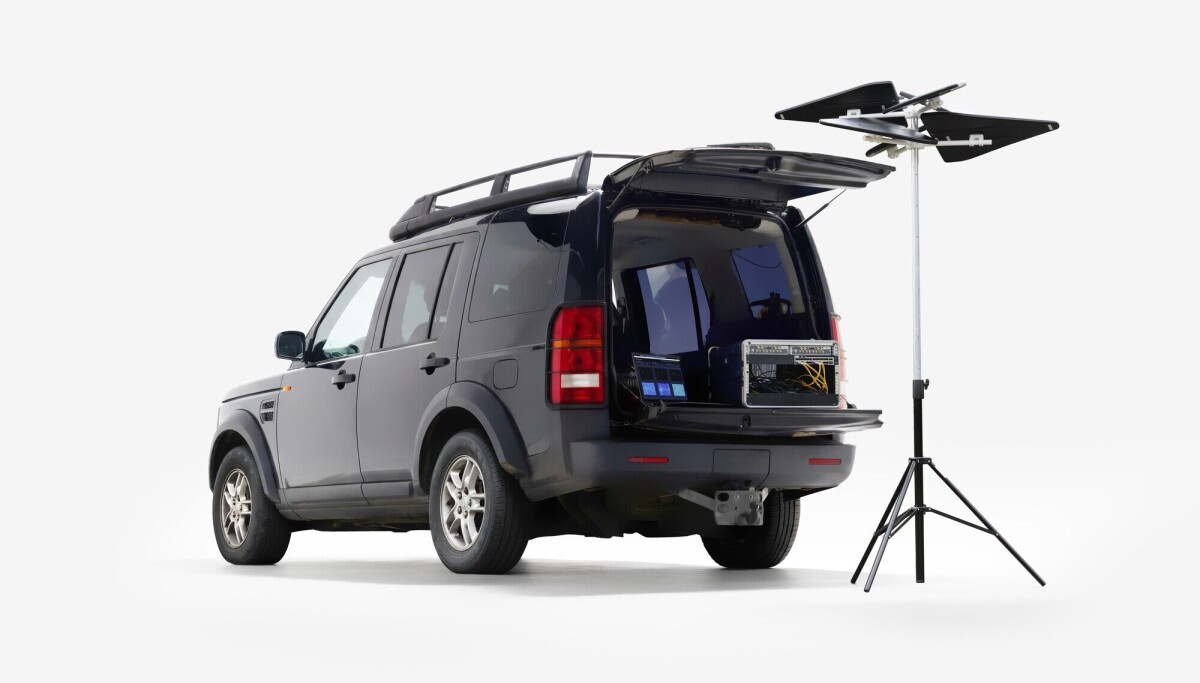
BAE Systems is developing a passive radar system that it says can track airborne threats at a fraction of the cost of conventional radar. The system relies on existing broadcasts rather than transmitting its own signal, which the company says makes it far harder to detect and locate.
The defense company says the technology, which it calls covert radar, picks up reflections of television, radio and mobile network transmissions from flying objects. By listening to these reflections, the system can monitor airspace without broadcasting a radar signal of its own.
How passive radar differs from conventional systems
Conventional active radar transmits radio waves and measures how they bounce back from objects, which is how it determines their location. The drawback is that the transmitter is easy to spot. Anyone monitoring the same radio frequencies can see the radar station, much like a powerful searchlight in the dark reveals the person holding it.
Passive radar is not a new idea. It works by using signals that already fill the air, such as broadcast towers and cellular networks, as the source of illumination. Because the radar station never sends out its own pulses, it does not add another signal for adversaries to find or for other equipment to interfere with.
Cost and portability
BAE says its use of commercial off-the-shelf equipment brings the cost down to as little as a tenth of comparable active systems. Off-the-shelf parts are mass-produced components that are sold to many buyers, which typically lowers prices compared with custom military hardware.
The equipment is also compact enough to be deployed from an SUV, which allows it to be moved quickly to where it is needed. That mobility could matter for units that need temporary coverage rather than a fixed installation.
Tracking targets and possible customers
According to BAE, the system can track a wide range of targets, from small drones to larger aircraft. It produces a three-dimensional air picture that includes target speed, heading, range and altitude.
BAE says this capability could suit law enforcement agencies and organizations that guard critical national infrastructure, as well as military users. The company pitches the system for sites such as airports, where avoiding interference with existing equipment is a priority.
- Tracks small drones and larger aircraft
- Provides 3D air picture with speed, heading, range and altitude
- Uses TV, radio and mobile network transmissions as signal sources
- Built from commercial off-the-shelf equipment, at as little as a tenth of comparable active system costs
- Deployable from an SUV
Official comments and planned trials
BAE’s product manager for Counter-Uncrewed Systems, Chris Shepherd, described the system’s potential uses. He said the radar could use broadcasts “without disturbance to keep crucial infrastructure such as power stations and air force bases safe from drone attacks.” He added that the technology would also help armed forces, allowing a soldier to monitor a battlefield without being detected.
BAE says the system will undergo live trials throughout 2027 with potential law enforcement, defense and critical infrastructure customers. The company has not announced pricing or a timeline for production orders.
Job cuts at the same company
The radar announcement comes as BAE Systems is also restructuring. The Financial Times reported that the company plans to cut more than 1,000 jobs at its head office and in its air division in the UK. BAE said the cuts would help it become more agile and meet government demands for “greater speed and efficiency” in delivering critical defense products.
The company has not said how the job cuts will be spread across the two units, and the passive radar trials will show whether the system moves from development into customer use in 2027.