

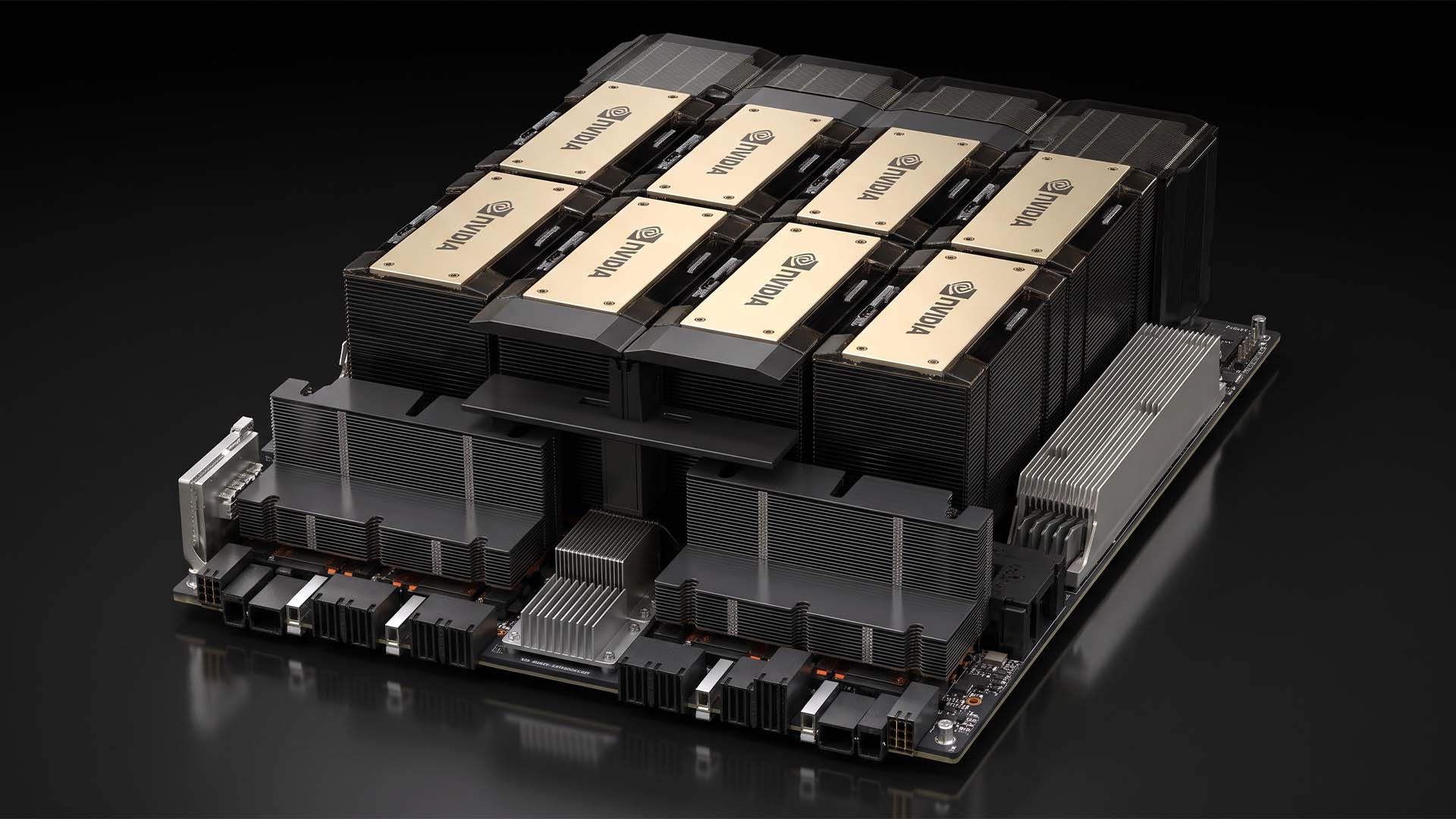
Nvidia H200 AI chips have not been banned outright in China under U.S. export control rules, but each shipment still requires routine government approval. A new investigation now says federal regulators cleared Nvidia H200 shipments to Chinese companies that appear to exist only on paper, including firms tied to sanctioned military suppliers.
The investigative reporting found that the Commerce Department approved roughly two dozen Chinese firms to buy or handle Nvidia H200 accelerators. The findings put pressure on the Trump administration’s approach to AI chip sales to China.
How the Nvidia H200 export policy came about
President Trump relaxed the export restrictions late last year after lobbying by Nvidia CEO Jensen Huang. The change created an unusual arrangement in which chips assembled in Taiwan were routed through the United States, allowing the U.S. to collect a 25 percent tariff on them.
Several well-known companies received approvals to handle Nvidia H200 chips. Those included Baidu, BYD, Tesla Shanghai, Alibaba, Tencent, ByteDance and ZTE Kangxun. The investigation found that clearance was also granted to firms with little visible business activity.
Shell companies with empty offices
Reporters visiting the registered Beijing address of an approved firm called New Matrix found a vacant concrete shell with wires dangling from the ceilings. The company was not listed in any company directory, and the building management had no record of the entity.
New Matrix was incorporated just 17 months ago. Its primary ownership sits with Wise Road, a private equity fund that the United States blacklisted in 2024 for acquiring sensitive chip assets for Beijing. Its key founder, Li Bin, chairs state-backed Tsinghua Unigroup. A subsidiary of Tsinghua Unigroup, New H3C Semiconductor Technologies, is on the U.S. Entity List for cooperating directly with the Chinese military.
Another approved licensee, Maginfra, also had an address that turned out to be a deserted room. It held nothing more than a handful of chairs and empty desks, and neighboring workers said they had never seen anyone enter. Analysts believe Maginfra operates as a front for Inspur, a major Chinese server vendor that Washington blacklisted in 2023 for supplying hardware to the People’s Liberation Army.
Military-linked recipients and unclear end users
Neither New Matrix nor Maginfra was cleared as an end user. Both companies were authorized to assemble H200 chips into AI servers for unspecified clients, which leaves the final destination of the hardware unclear.
The investigation also identified recipients with military affiliations. Zhejiang Yindun Cloud Technology operates inside data centers owned by Range Intelligent Computing, a cloud provider that serves provincial defense bureaus and satellite defense networks. Shanghai Jiatang emerged from the state-owned Datang Telecom, which develops military-grade communications and cryptography.

Questions for Nvidia and the Commerce Department
Liza Tobin, a former China director on the White House National Security Council, said that neither the Commerce Department nor Nvidia appears to be conducting the due diligence needed for these approvals. She said the issue could be one of the harder questions Jensen Huang faces at a Closed Door Briefing scheduled for November 18.
The findings add to a debate over how the U.S. screens buyers of advanced AI chips. Shell companies, unlisted addresses and undisclosed end users make it difficult to confirm where accelerators end up once they leave approved channels. Whether regulators change the approval process before the briefing remains to be seen.