

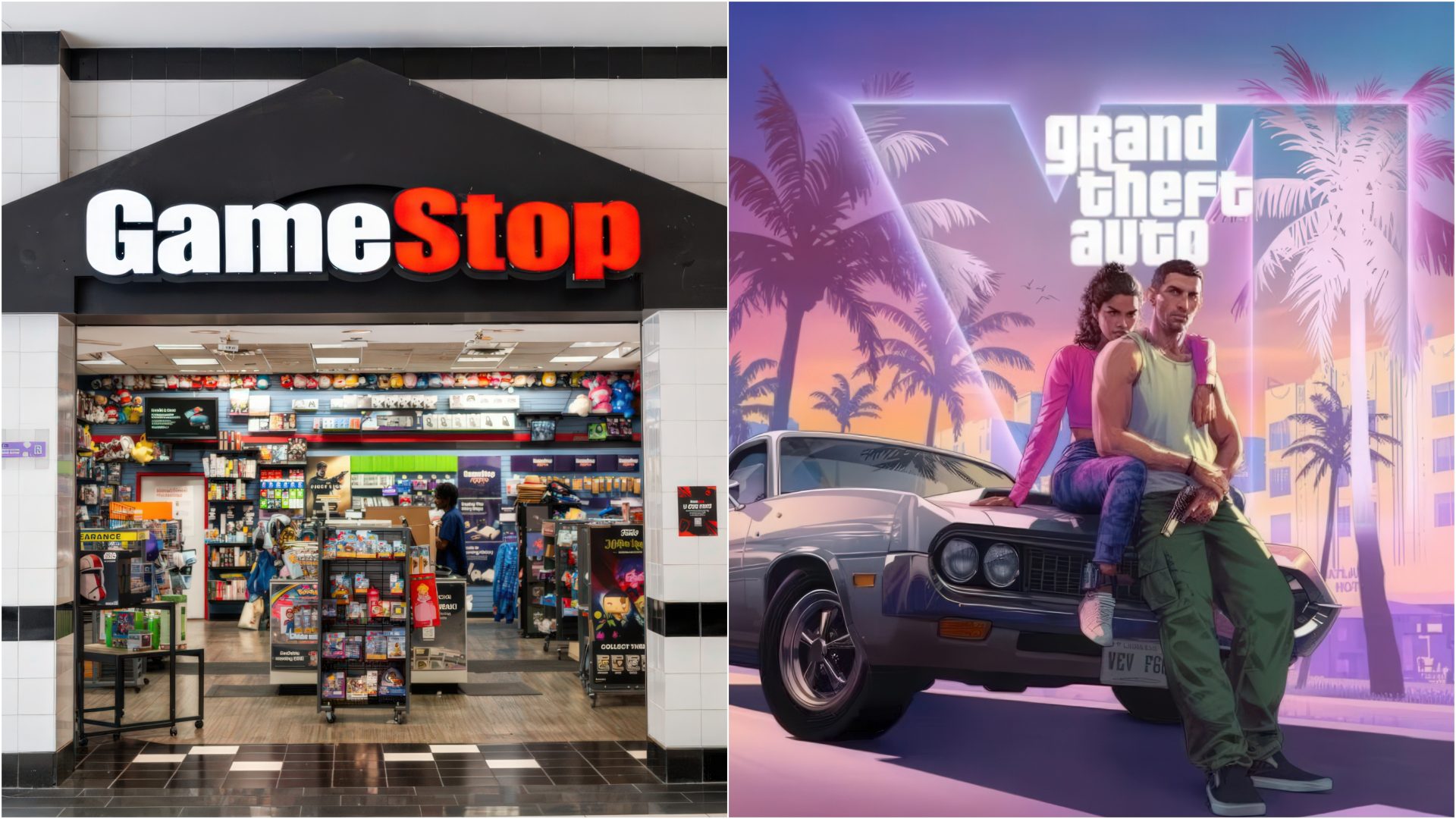
GameStop CEO Ryan Cohen has criticized the move to digital-only releases for GTA 6, saying players should be able to resell, trade or lend the games they buy. In an interview with Bloomberg, Cohen said the shift away from physical discs has hurt both consumers and his company.
Cohen says digital-only sales hurt consumers
In the Bloomberg interview, Cohen said that when someone buys a game, they should be able to sell it, trade it, or lend it to a friend. He argued that the decision to move to all-digital distribution has harmed shoppers and GameStop alike. Cohen also said publishers dislike trade-ins because removing a used copy from the market eliminates an alternative to buying new. In his view, that approach takes away competition.
Cohen’s comments came as Rockstar Games and parent company Take-Two move GTA 6 toward digital distribution. Digital-only releases mean a buyer receives a license to download and play a game rather than a physical disc that can be passed on. For players used to the disc model, that difference affects whether a game can ever be sold back or lent out.
Why the GTA 6 digital shift hits GameStop
GameStop is the largest game retailer in the United States, Europe and Australia, so changes to how games are sold affect its business directly. Cohen acknowledged that a move like the one by Rockstar and Take-Two hurts the company. Shifts like this are not entirely surprising, given how the industry has been moving.
The trend has been building for some time. Bloomberg reported that in the previous quarter, pre-owned and refurbished products accounted for 22% of all GameStop sales. That segment generated roughly $171 million in revenue, a 32% decline on a year-over-year basis. Used game sales have long been a profit source for retailers because trade-in credit keeps customers coming back, so a shrinking used market cuts into that model.
Sony’s planned disc change could add pressure
GameStop could face even more pressure if Sony goes ahead with a controversial plan to stop making new PlayStation discs starting in January 2028. The plan has drawn strong reactions, and the company’s decision would put physical game sales on a clear end date for PlayStation titles. For a retailer that depends on physical software, a change of that scale would be difficult to offset.
Cohen told Bloomberg that he met with Representative Ritchie Torres, a New York Democrat who announced the Power To The Players Act in October. The proposed bill would direct the Federal Trade Commission to establish regulations protecting consumers’ ability to own and play the video games they purchase. Torres said that when someone pays for a game, they should own it. He added that a game that can be taken away once a company pulls the plug is not a purchase but a rental disguised as a sale.

Legislation faces a difficult path
The proposal is essentially the US equivalent of the European Stop Killing Games Initiative, which focuses on keeping games playable after publishers stop supporting them. Neither effort is likely to produce results soon, according to the source reporting, because most game companies appear determined to phase out physical discs. Any federal rules would also need to pass Congress before they could take effect.
GameStop stock shows no immediate impact
Despite the criticism and the sales decline in used products, GameStop’s stock has not yet reflected the digital trend. Over the last six months, the shares have grown by 21.68%, with a gain of 7.41% in the last month alone. Whether the disc phase-out and any new rules will change that picture depends on how quickly physical sales decline and whether lawmakers act on the Power To The Players Act.