The CultGame demo is a text-based cult management game that takes its cues from the Bay 12 titles Dwarf Fortress and Liberal Crime Squad, and it runs in a plain command prompt window rather than a conventional game window. Players build a cult from a procedurally generated world, preach to win followers, and then decide how far they want to go with blood magic and worse.
A text-based game built on ASCII and the numpad
The CultGame demo uses ASCII art for its visuals, with options selected by pressing keys on the numpad. Its maps are made of symbols such as @ signs and hashes, and the interface is dense with text panels and menus. The style is deliberately old-school, and it is the first thing players notice when the game launches from Steam.
The game is primarily a management title. After a player generates a world and its history, they choose a cult leader type from four options: Defector Cleric, Occult Scholar, Con Artist or Lunatic. Players can also rewrite most of the starting setup, including the deity type their cult follows, and the game accepts unusual entries for the creed of a new faith.
Procedural worlds, preaching and the first followers
Like Dwarf Fortress, the CultGame demo generates a full worldmap at the start and fills it with locations of interest. The map includes barren plains, thick unpopulated woodlands, dense urban areas, existing religions and political factions. Players can start preaching in any region to convert people to their cult.
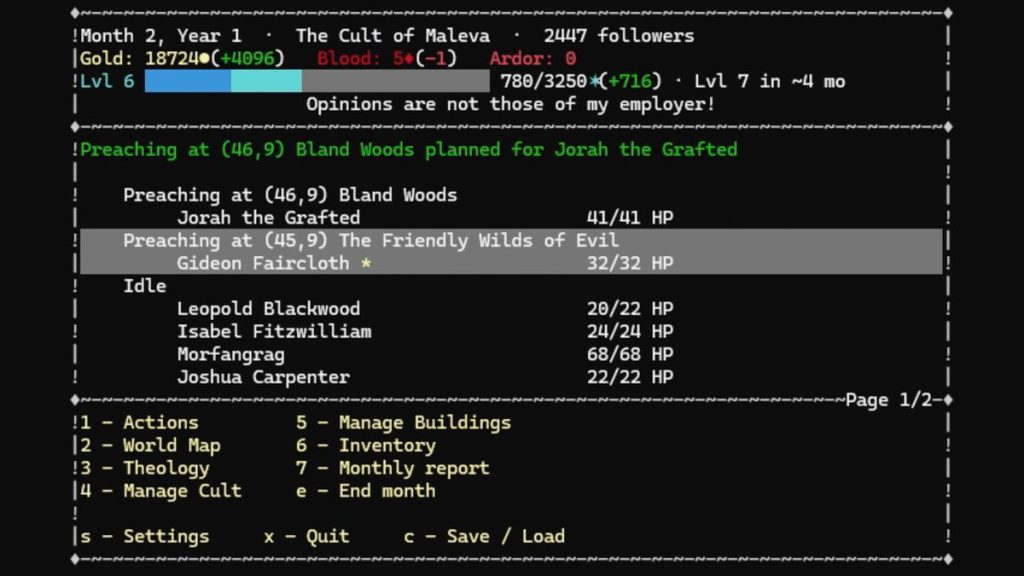
In the early stages, preaching produced about 60 followers per turn. Converted followers began recruiting others themselves, and recruits who could be directly controlled sped up growth. In the screenshots shared with the coverage, the cult reached 2447 followers by month two of Year 1, with 18724 gold banked from tithes. Preaching also unlocked public works such as shrines and gardens, which improved the cult’s standing in the towns where it operated.
Rituals, blood magic and fleshgrafting
Rituals depend on the deity’s chosen domain. In the demo, a blood-domain deity gives access to flesh-related magic, and adding fire unlocks further spells, including a targeted meteor strike that can raze a city. Blood powers the flesh rituals, so cults need a steady supply, which can mean recruiting low-stat followers and converting them into a resource.
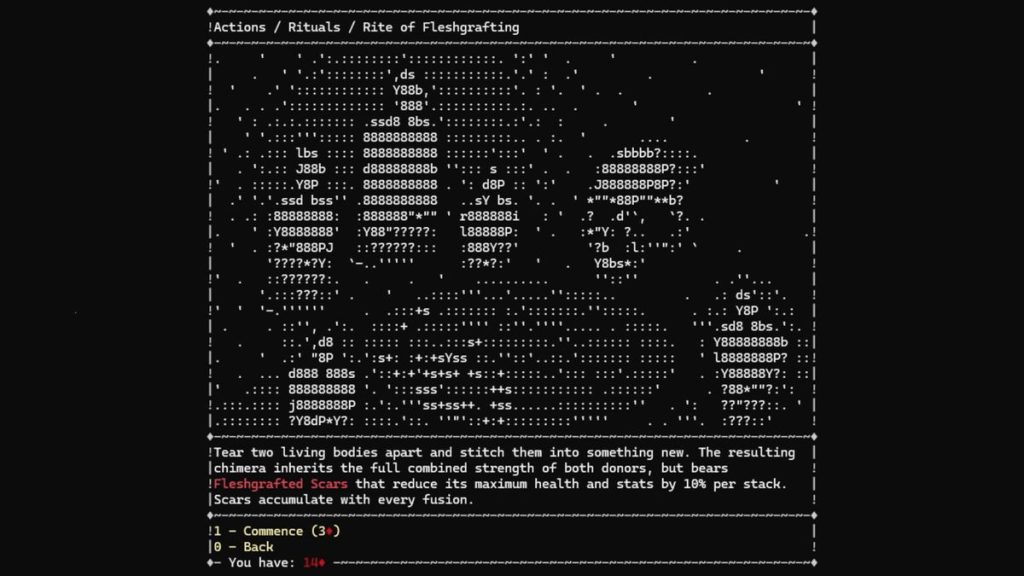
One of the most notable outcomes is fleshgrafting. In the demo, two underperforming cultists named John and Sarah were fused into a single creature called Jorah the Grafted. The fused creature inherits the combined strength of both donors, but each fusion leaves scars that reduce maximum health and stats by 10 percent per stack.
Blood rituals can also summon a blood demon. In the same run, a ritual summoned a demon named Morfangrag, whose stats were far above the rest of the cult. The demon needs a monthly dose of blood to avoid turning on the cult, which the cult could supply by keeping a stream of recruits.
Crusades, charm and a cult of snails
The CultGame demo includes a Crusade feature that sends followers to heathen areas to burn them in the name of the faith. Morfangrag was sent to a cave full of skeletons and spiders, and he cleared them without trouble. After the cult gained enough influence to adopt a new belief, the player picked one that allowed the cult to speak to animals.
Using that belief, Morfangrag approached a group of three snails and used the Flirt option. All three snails were charmed and became part of the cult, and they joined the demon on dates to the local dump. The snails were later sacrificed to fuel more fleshgrafting, which the player described as a central part of the game’s dark humor.
What the CultGame demo means for players
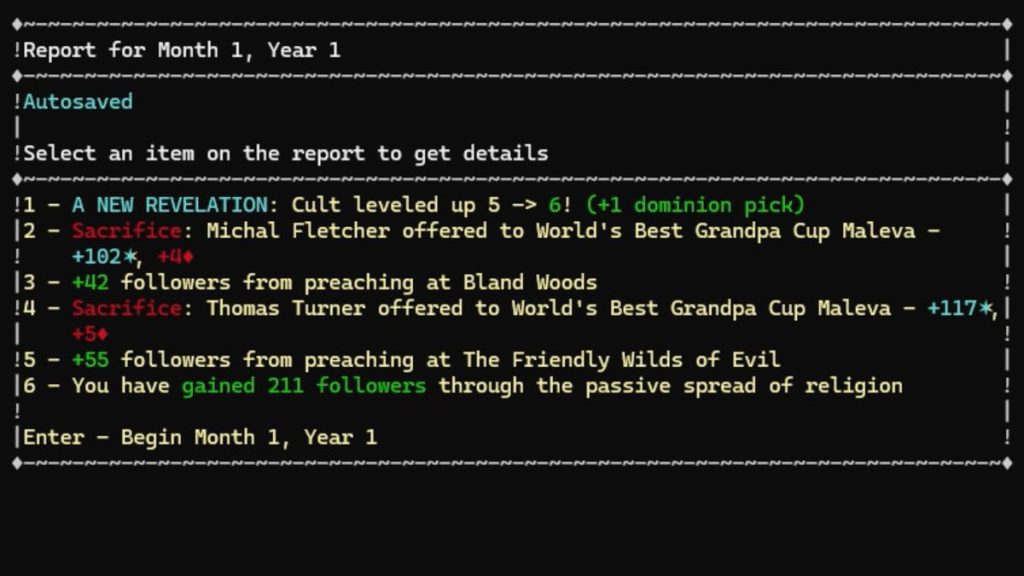
The CultGame demo shows how much freedom a text-based management game can offer. Players can rewrite the basic setup, combine unusual rituals, and pursue violent or absurd paths without the game stopping them. The monthly report also tracks sacrifices, follower growth and the passive spread of religion, so the player can see the cost of each choice.
The demo is an early look, and the full game’s scope, release date and price were not part of the material. Players who enjoy Dwarf Fortress-style systems will find familiar ideas here, but the CultGame demo focuses on preaching, rituals and cult politics rather than city building.