

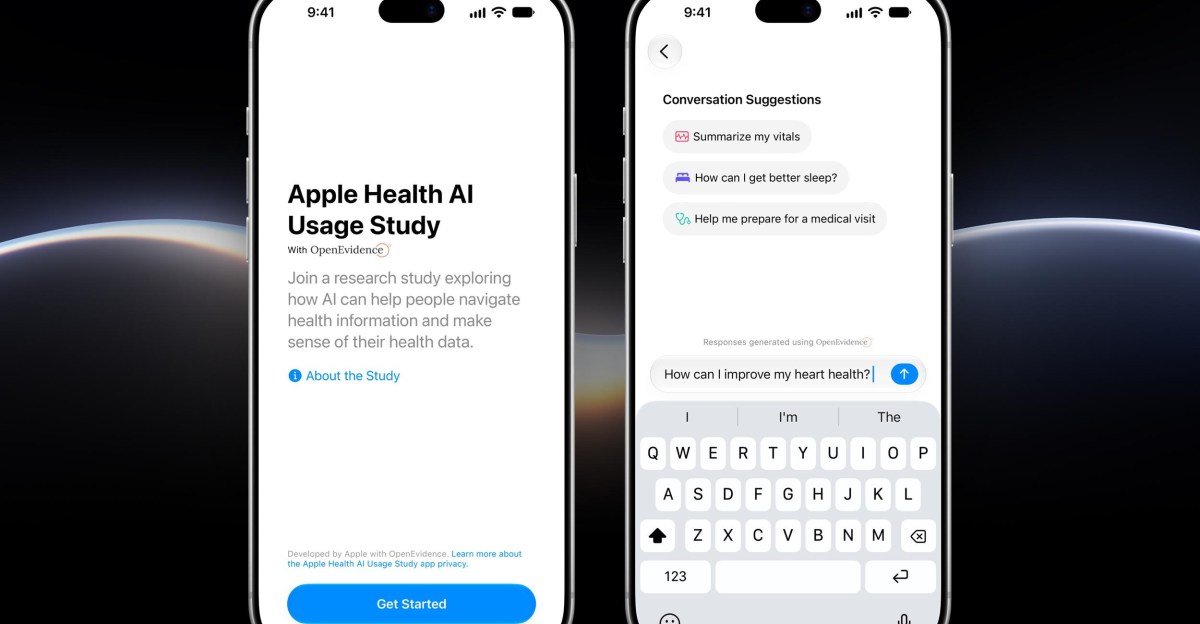
Apple has launched the Apple Health AI Usage Study, a research project designed to measure how people use conversational AI health tools and how useful their answers are. The Apple Health study is run in collaboration with OpenEvidence, and enrollment opened today with Apple looking for up to 200,000 participants.
How the Apple Health study works
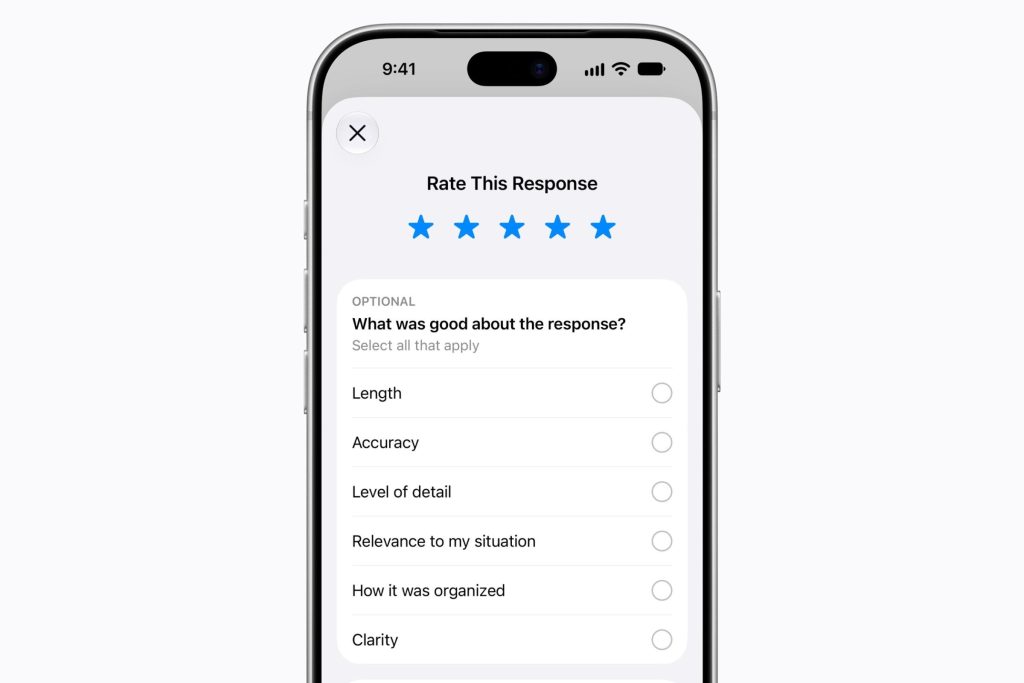
Participants use a new iOS app to ask medical questions and then rate the responses. Ratings cover criteria including accuracy, level of detail and relevance. The app is available for download now, and the study is open to people aged 21 and older who live in the United States.
The app answers questions with easy-to-understand responses and links to peer-reviewed clinical sources. OpenEvidence is a clinical AI platform used by healthcare professionals, and it generates answers based on medical information from sources such as The New England Journal of Medicine. Apple said the study is meant to show how people read, understand and judge answers of this kind.
Input is text-based. Users can dictate questions with the iOS keyboard’s dictation option, but the app is not integrated with Siri or Apple Intelligence. Apple said the app does not use Apple Intelligence at all, although it does require an iPhone 15 Pro running iOS 26 or later.
Optional access to HealthKit data
During enrollment, participants can choose to share data from Apple HealthKit, the framework on iPhone that stores health and fitness information. Examples include activity, sleep and clinical lab results. With that access, the app can give responses that take a person’s own health context into account rather than general information alone.
Sharing is optional. Apple said it has taken steps to keep user information confidential and that the data collected will not be used to train AI models. That commitment matters because health records are among the most sensitive personal data a phone can hold, and people are often reluctant to share them with software tools.
Apple has not published details of how long data will be kept or how it will be handled after the study ends in the material provided. Readers who plan to join should review the privacy information in the app before enrolling.
What the study is meant to measure
The stated goal is to improve the design and functionality of AI-powered health tools. Apple wants those tools to deliver relevant health information that is easier to understand and act on. The ratings collected through the app are intended to show where answers succeed and where they fall short for everyday users.
Rating works through a five-star scale. After giving stars, participants can optionally select what was good about a response from a list that includes length, accuracy, level of detail, relevance to their situation, how the response was organized and clarity. The structure gives researchers more specific feedback than a single overall score.
Apple’s view on health AI and trust
Sumbul Desai, MD, Apple’s vice president of Health and Fitness, framed the study around research rather than product promotion. “At Apple, we believe responsible innovation starts with scientific rigor and clinical grounding,” Desai said. She added that the study is intended to help advance the wider scientific conversation about health AI.
Desai also said the company wants to keep building tools that people can trust as technology changes. Health questions are personal, and a wrong answer can have real consequences, so the emphasis on accuracy and peer-reviewed sources reflects that concern. The study does not promise that AI answers will replace medical advice from clinicians.
What readers should know before joining
Eligibility is narrow for now. Participants must be 21 or older, live in the US and own an iPhone 15 Pro or later model that runs iOS 26. Because the app runs on iOS 26 and does not use Apple Intelligence, it works independently of the company’s broader AI features.
Apple is seeking up to 200,000 participants, and enrollment began today. Whether the company will publish findings from the study, and when, was not stated in the announcement. Anyone with a health question should still consult a qualified medical professional for personal decisions.