

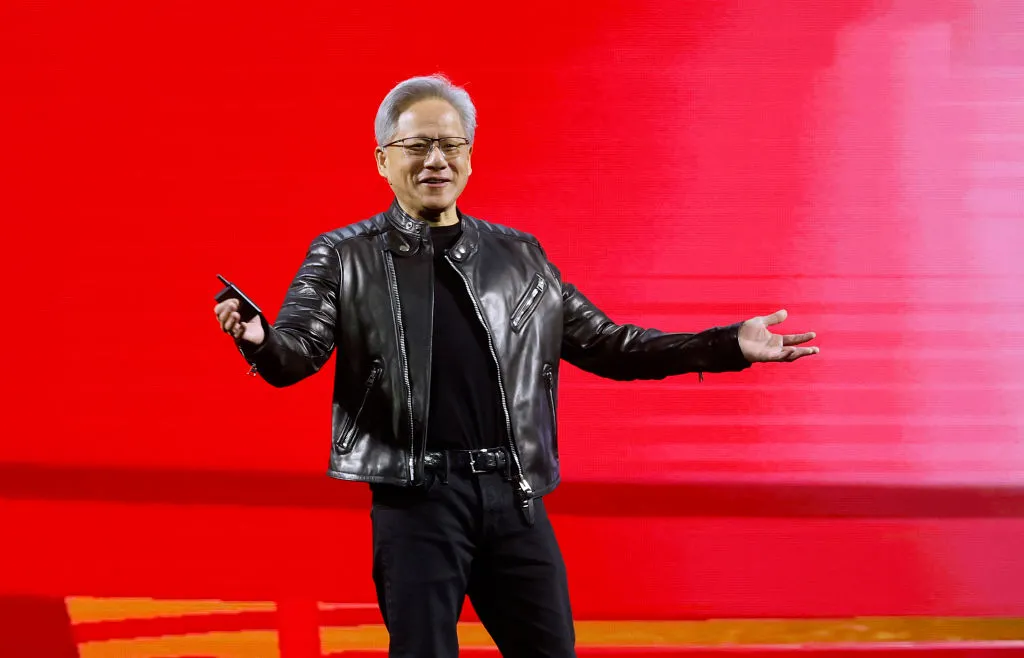
Jensen Huang resigned as chief executive of Nvidia on November 12, 2026, after publicly admitting to an extramarital affair. The personal scandal has since widened into a national security question, with U.S. officials reportedly believing that one of his alleged romantic interests is a Chinese spy.
Huang, 63, is the co-founder of Nvidia, the company he started 33 years ago. Few technology leaders have been as far from controversy as the heads of AI companies such as OpenAI and SpaceXAI, but the Nvidia story has now moved from the boardroom into Congress and the Justice Department.
How the Jensen Huang affair allegations emerged
On November 8, Jensen Huang wrote to Nvidia employees, in a letter that was also published as a press release, that he had cheated on his wife of 40 years. He did not name the woman involved, but he linked his conduct to “the national security concerns raised in news reports.” In the same message, he said Nvidia’s board of directors had started an independent investigation and that he would cooperate fully.
“I owe my family and all of you an apology,” Huang wrote. “I was unfaithful to my wife. My actions hurt her and our children. There is no excuse for what I did. I am deeply sorry.”
The New York Times later reported, citing five people who worked at Nvidia, that Jensen Huang also had a relationship with Kimberly Powell, the company’s vice president of healthcare, who reports directly to him. The Times said the two were captured on film “being affectionate” at a hotel during a conference earlier this year. Nvidia, Huang and Powell have not confirmed that report. When a Times reporter reached Huang, he reportedly said, “I don’t think you should be talking to me directly,” and hung up.
Reuters later reported that Jensen Huang had a third affair, this time with an unnamed Nvidia employee. Those claims have not been confirmed by the company.
Alice Huang, Megaspeed and the chip investigation
U.S. officials believe that one of Jensen Huang’s likely romantic interests, Megaspeed executive Alice Huang, is a Chinese spy who has been passing information to Beijing. Alice Huang is a Chinese citizen and is not related to Jensen Huang.
Megaspeed is a Singapore-based AI infrastructure company that reportedly bought $4.8 billion worth of Nvidia chips over the last two years. The United States and Singapore have both investigated Megaspeed over suspicions that it illegally shared chips with China. The Justice Department has since taken over the federal investigation, according to The New York Times.
Other reports added detail about the business links. The Information reported that Alice Huang and her family built a network of companies in China and Singapore to acquire Nvidia chips, including a Chinese company called Shanghai Century Litong. Founded in 2023, the firm became an Nvidia-preferred cloud partner, which gave it priority access to chips. The Information also reported that Shanghai Century Litong facilitated purchases of $7.5 billion worth of Nvidia chips, including banned chips.
Bloomberg reported that Nvidia’s head lawyer, Tim Teter, contacted Commerce Under Secretary Jeffrey Kessler during a 2025 government probe into Megaspeed and asked whether the Trump administration had played a role in detaining Alice Huang.
Nvidia’s leadership change and earnings report
Nvidia’s board accepted Jensen Huang’s resignation on Wednesday, November 12. CFO Colette Kress took over as interim CEO while keeping her finance duties. Nvidia is expected to run a broader search for a permanent successor. Harvey C. Jones, a managing partner of Square Wave Ventures and former CEO of Synopsys, was named the company’s first-ever chair of the board. Jones has sat on Nvidia’s board since 1993.
Before the resignation, The Wall Street Journal reported that Jensen Huang had been critical of Kress and had described her as “a deer in the headlights” during a presentation this summer. Bloomberg reported that he looked “broken and shattered” when he gave up the role.
Nvidia reported quarterly earnings on November 17 that beat Wall Street expectations, with $115.8 billion in revenue, up 103% year over year. Kress said full-year revenue is also on track to exceed expectations and that the company plans to raise its outlook for fiscal 2028. Nvidia chairman Harvey C. Jones said the company is not considering bringing Jensen Huang back. Kress also said Nvidia will stop selling its H200 chips in China, which ends the company’s participation in a loophole in the U.S. ban on advanced chip sales to the country.
Jensen Huang posted his first public statement since the affair admission on November 17. He said he had seen “an outpouring of calls” from employees, investors, partners and customers for him to return as CEO, and wrote that he would be “honored” to return if the board decided it was in the best interest of shareholders, employees and the country. Elon Musk, Anduril founder Palmer Luckey and Y Combinator President and CEO Garry Tan have also called for his return.
Congress and the White House weigh in
Congressional scrutiny has grown since the first reports. On November 11, House China Committee Chairman John Moolenaar said on Fox Business that Jensen Huang would likely be subpoenaed if he did not agree to a closed-door briefing requested by three Republican congressmen. On November 12, Representative Richard Neal and Senator Ron Wyden wrote to Commerce Secretary Howard Lutnick that they would investigate how the Trump administration handled Nvidia’s chip sales to China. Senator Tim Scott asked that Jensen Huang and Lutnick testify before the Senate Banking Committee.
Jensen Huang confirmed he would testify before Congress before Thanksgiving, which falls on November 26. The session is expected to be closed to the public, and House Foreign Affairs Committee Chairman Brian Mast said he believes it will be recorded and transcribed. On November 8, President Trump said he had not spoken to Jensen Huang about the matter, calling him “a fine person,” and said he thought Huang should remain chief of Nvidia.
The stakes are high because Nvidia makes some of the world’s most important AI chips, and those chips are central to the U.S.-China race to build advanced AI infrastructure. Whether Jensen Huang returns to Nvidia, and what the congressional testimony reveals, will determine how far the fallout reaches.