


An Optimizely supply chain attack has loaded malicious JavaScript on numerous popular websites, including Zoom, CNN, Fox News, BBC and Salesforce. Visitors to those sites were exposed to scripts designed to steal cryptocurrency and payment information and to deliver exploits aimed at iOS devices.
Optimizely is a digital experience and experimentation platform that companies use to test and personalize their websites. Its JavaScript files are loaded into customers’ web pages to provide that functionality, so a tampered file can reach every visitor of every site that uses it.
How the Optimizely supply chain attack was uncovered
Security researcher Scott Helme reported on Monday that his team had identified 188 infected Optimizely JavaScript files belonging to 178 organizations. The team reached that count after analyzing 1,611 scripts used by the platform. According to Helme’s analysis, attackers inserted malicious code into Optimizely customer projects. As a result, JavaScript files hosted on the company’s content delivery network (CDN) loaded malware on any website that used the service.
Independent confirmation came from scans recorded by urlscan.io. Those scans show the malicious script loading, or attempting to load, on sites including Zoom, KLM, GitLab, BBC, Scheels, CNN, American Girl, ManageBuilding, Smartsheet, Stamps.com and Salesforce.

Which brands were affected
The list of affected websites extends well beyond those names. Other sites include Fox News, Mutual of Omaha, American Eagle, Air France, Change.org, Optimizely itself, HSBC Insurance, Bitly, IG and UNICEF USA. Because the payload was loaded through a shared third-party script, each site inherited the risk regardless of its own security setup.
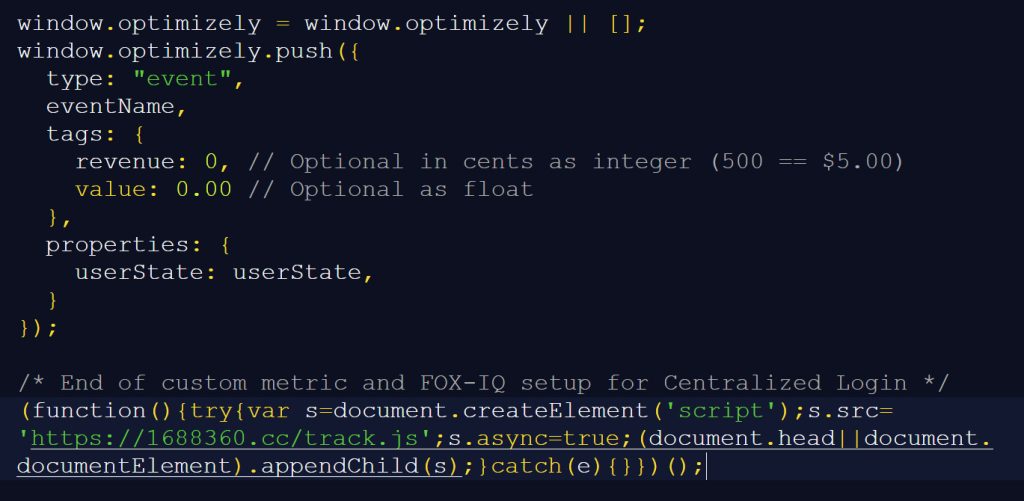
Analysis of the modified Optimizely JavaScript files showed that the injected code was built to load a second script from https://1688360[.]cc/track.js. Some files referenced that address directly. Others used Base64 encoding and JavaScript’s atob() function to hide the URL and decode it at runtime. Helme also found a variation that would run an embedded copy of the malicious code if the remote script was blocked.
What the malicious track.js script does
An analysis of the track.js file revealed several capabilities. The script combines theft methods that target both desktop and mobile visitors:
- Cryptocurrency hijacking: Monitors web pages for cryptocurrency wallet addresses and replaces them with attacker-controlled addresses to redirect transfers.
- Payment card skimming: Searches for credit card numbers, expiration dates and security codes entered on pages, then attempts to send them to https://1688360[.]cc/card.php.
- iOS exploit delivery: Loads additional malicious JavaScript aimed at iPhones and iPads. Helme identified these secondary payloads as the Coruna and DarkSword exploit kits, which target different iOS versions.
The script can also collect browser cookies, webpage URLs and screenshots, and send them to the attackers.

Crypto losses and cleanup progress
Helme’s investigation found that cryptocurrency wallets embedded in the track.js script received about $7,000 in transactions on November 16. That suggests the clipboard-hijacking component of the malware succeeded in capturing some cryptocurrency payments.
Helme reported that cleanup had reduced the number of infected scripts. As of 21:52 UTC on November 16, only one of the 188 previously compromised files still contained malicious code. The earliest hijacked Optimizely script the investigation traced dates to early morning on November 16.
Open questions about the Optimizely attack
It remains unclear how the attackers gained access to modify so many different customer projects. It is also unknown whether the intrusion involved a compromise of Optimizely’s own infrastructure, stolen credentials or another form of unauthorized access. Requests for more information were sent to Optimizely, and no detailed response has been reported yet. Site owners that use the platform are likely to review their scripts, check payment pages and rotate any credentials tied to their Optimizely projects while those answers remain pending.