

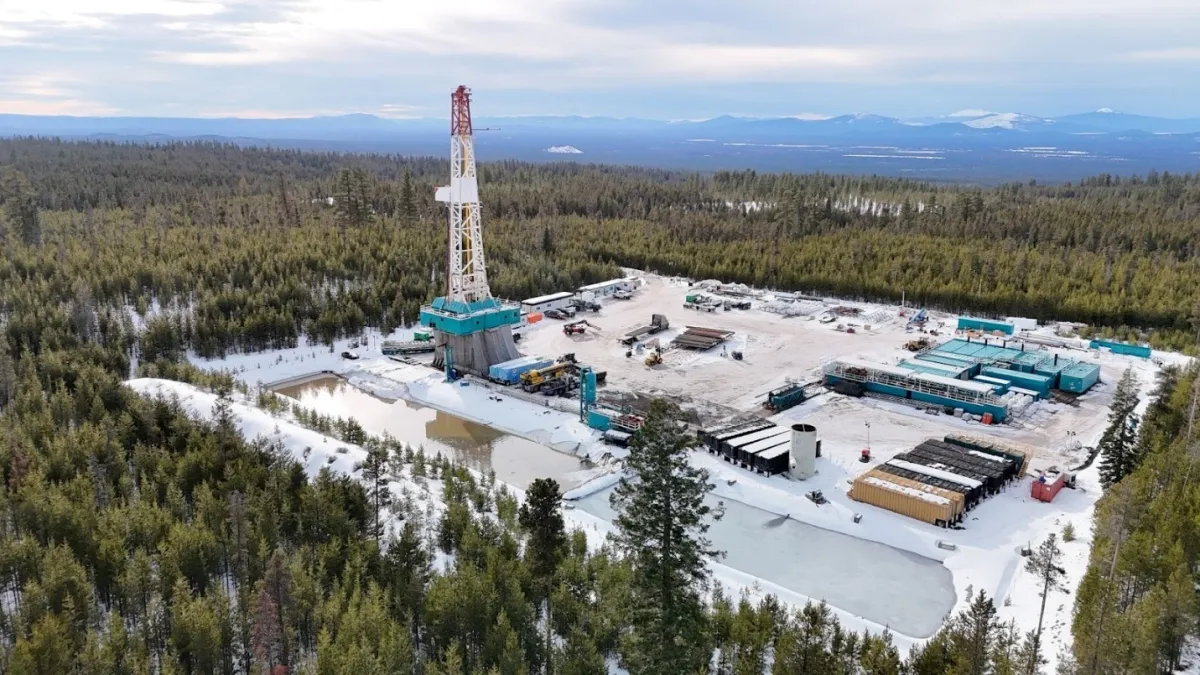
Mazama Energy has developed a drilling technology that uses liquid carbon dioxide to cool the drill bit and carry rock cuttings to the surface, a change the company says lets it drill faster and deeper. The startup gave TechCrunch an exclusive look at the system, which it calls Carbon Chill.
Why drilling speed matters for geothermal power
Success in geothermal energy comes down to two goals: drill fast and drill deep. Hitting both can make geothermal startups cheaper than nearly every other source on the electrical grid. The problem is that drilling fast generates heat, and drilling deep does too. Both conditions damage drilling equipment.
Mazama Energy said its rate of penetration, the speed at which the bit advances through rock, rose 20% above what it was already achieving. Sriram Vasantharajan, co-founder and CEO of Mazama Energy, told TechCrunch that the gain came on top of already very high rates.
Speed also affects cost. Drilling accounts for about 25% to 30% of the total cost of building a geothermal power plant, so shorter drill times can lower project costs significantly. Mazama Energy and other startups are aiming to reshape the grid in the 2030s, and hyperscalers are already planning facilities that will come online at the end of the decade.
How Mazama Energy has pushed into super-hot rock
Mazama Energy has been working on this problem for several years. In October 2025, the Khosla-backed company said it had drilled a well in Oregon that reached 629 degrees Fahrenheit (331 degrees Celsius). Vasantharajan said a more recent well has surpassed 700 degrees Celsius.
In September, Mazama Energy raised $135 million in a round led by Centaurus Capital and Doerr Capital. The company said the funding will help it drill more wells, deeper.
Mazama Energy hopes its carbon dioxide cooling will help prove that geothermal energy from super-hot rock can compete in the electricity market. Super-hot rock is generally defined as rock where temperatures exceed 752 degrees Fahrenheit (400 degrees Celsius).
Why super-hot rock is attractive
Geothermal experts see super-hot rock as a way to improve the output of individual wells. At those temperatures, water becomes supercritical, a state that behaves like a gas-like liquid and carries five to ten times more energy than water from traditional geothermal wells. Developers that harvest more energy from each well need fewer wells, which lowers costs.
Companies including Google and Meta have already started exploring geothermal power. A report from the National Laboratory of the Rockies said geothermal could generate between 26.5 and 57 terawatts of electricity in the United States alone. Developing just 10% of the conservative estimate would more than double the country’s peak generating capacity.
Why conventional drilling fluids fall short
Most geothermal drillers use mud, a mix of water and other compounds, to keep the bit cool and clear cuttings from the borehole. Mud can only lower temperatures so far. At high enough heat, the electronics in the drill bit that help keep it on course begin to fail. Vasantharajan said high temperature-rated electronics do exist, but they would be cost prohibitive.
Mazama Energy takes a different approach. It injects liquid carbon dioxide down the center of its drill string. As the fluid travels deeper, the surrounding rock heats it until it also becomes supercritical. Just before it reaches the drill head, it passes through a valve shaped like a rocket nozzle. As the gas expands through the cone-shaped nozzle, it cools rapidly and absorbs heat from the electronics and the bit.
Vasantharajan described the cooling method as a binary choice. Without technologies like it, he said, the company cannot drill horizontal wells in super-hot rock at those temperatures today.
What comes next for Mazama Energy
With the new funding, Mazama Energy plans to drill more wells at greater depths. By next year, Vasantharajan said the company hopes to complete a single well capable of generating up to 15 megawatts of electricity. He said the company now sees a path toward commercial super-hot rock geothermal, a goal that he described as moving from a dream to a promise. Whether the carbon dioxide system can perform at that scale on a commercial timeline remains to be seen.