

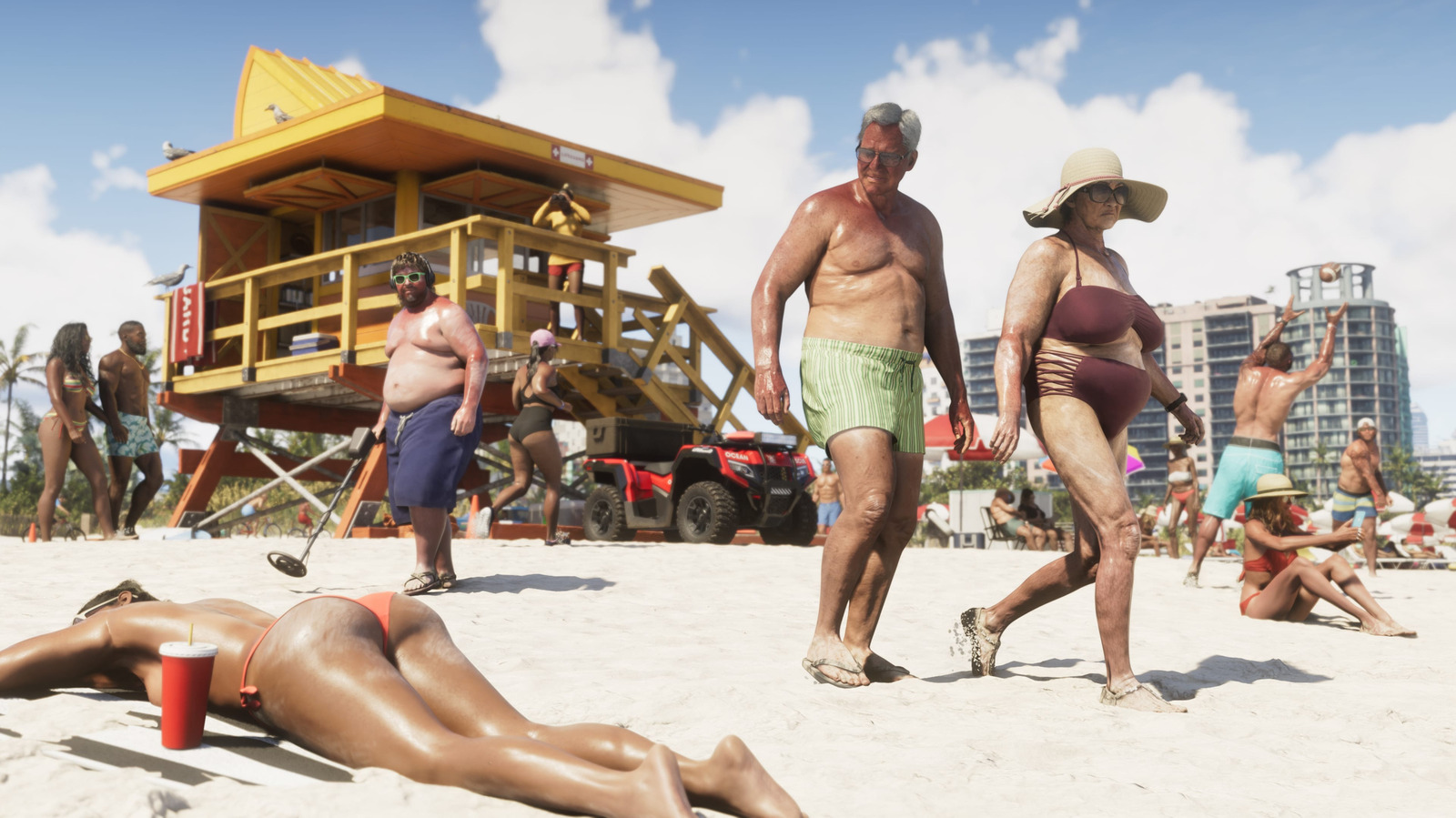
The newly released GTA 6 has drawn attention for its record-breaking launch, but one player says the game’s built-in camera has landed them in trouble with Sony. A PlayStation Network user says their account was placed under a 30-day social restriction after they shared a photo containing nudity taken inside the game.
What the player says happened
The player, who posts under the handle @derrickgott007 on X, said they received a notice from PlayStation Safety. The message stated that their account was being temporarily suspended from social features for 30 days because they had breached the company’s code of conduct on pornographic or obscene content. The player says the image was a photo taken with the camera feature of a nudist resort they found in GTA 6. They then shared it with another person on PSN.
The notice did not change the player’s view that the image came from a game, not from a real-world source. Their account of the sequence of events, including the in-game location and the private sharing, comes from their own posts and has not been confirmed by Sony.
What PlayStation’s rules say
Sony’s code of conduct includes a specific rule against sharing, soliciting, accessing, distributing or storing “material that is obscene, pornographic, or illegal.” Read literally, the rule covers the image the player shared, which is why the restriction may be justified under the policy as written. Platform rules of this kind typically apply to all content on the network, regardless of where the material was created.
Enforcement actions like this one usually follow a standard process that includes a notice and a time-limited restriction. The player’s ban limits social functions rather than full account access, which is a common approach for content-related violations on console networks.
Why the situation looks contradictory
The case raises a question about consistency. The nudity appeared inside a game running on a PS5, and GTA 6 is sold digitally by Sony on the PlayStation Store. Under this logic, the game itself can contain adult material, but capturing that content as a photo or screenshot can break the rules once it is shared. Critics of the decision could argue that the policy treats the same material differently depending on the format.
The player also said the restriction affects more than messaging. Because online multiplayer counts as social activity under the suspension, they say they cannot play Call of Duty during the 30 days, even though they can still access some offline games. That detail shows how broad a social restriction can be on the platform.
What this means for players
The incident highlights how few players read the terms that govern their accounts. Terms of service (ToS) and end-user license agreements (EULA) often run to many pages, and most people accept them without reading them in full. Projects such as ToS;DR summarize and rate these documents to make them easier to understand, but the problem remains widespread.
- Check the conduct rules on any console network before sharing screenshots or clips.
- Assume that in-game captures can be treated the same as any other shared content.
- Understand that a social suspension can also block online multiplayer for its full length.
What remains unclear
Sony has not publicly responded to the case in the details provided by the player, and it is not known whether the restriction will be reversed or upheld. The player’s account is based on the notice they received and their own description of the image, so the exact content and context of the photo remain unverified. For now, the case serves as a reminder that the rules on a platform can apply to moments inside a game as well as to the game itself.