

Windows 11 is getting a memory management overhaul that Microsoft says makes the operating system up to 20% more responsive on PCs with 8GB of RAM. The changes arrive as memory prices have climbed sharply this year, pushing 8GB back to the typical starting configuration for many Windows laptops.
As recently as the start of 2026, 16GB of RAM was common on Windows laptops priced under $800. That extra memory helped offset an operating system that many users already felt was getting heavier. With the cost of RAM rising, 8GB is once again standard on entry-level machines. Apple’s MacBook Neo has managed with that amount, but Windows laptops, including Microsoft’s own 13-inch Surface Laptop, could struggle under heavier workloads.
What Microsoft changed in Windows 11
Earlier this month, Pavan Davuluri, Microsoft’s executive vice president of Windows and devices, outlined the improvements in a blog post. Davuluri said Windows is now up to 20% more responsive and that multitasking is up to 40% faster in the company’s lab tests.
The biggest change is in memory management. When a PC does not have enough free memory for all active data, the system moves some of it to storage, a process known as paging out. SSDs are far slower than RAM, and the gap is wider in lower-cost laptops that use slower drives. Davuluri said Windows can now keep up to 2 GB more active data in memory rather than moving it to storage, which makes it less likely that an app or browser tab reloads when a user returns to it.
How hard faults slow down 8GB PCs
When Windows needs data that has been paged out to the SSD, it registers a hard fault, also called a page fault. A high rate of hard faults is what causes visible slowdowns. On an 8GB laptop, frequent faults can make browser tabs reload before they can be used again, and they can make the whole system feel sluggish.
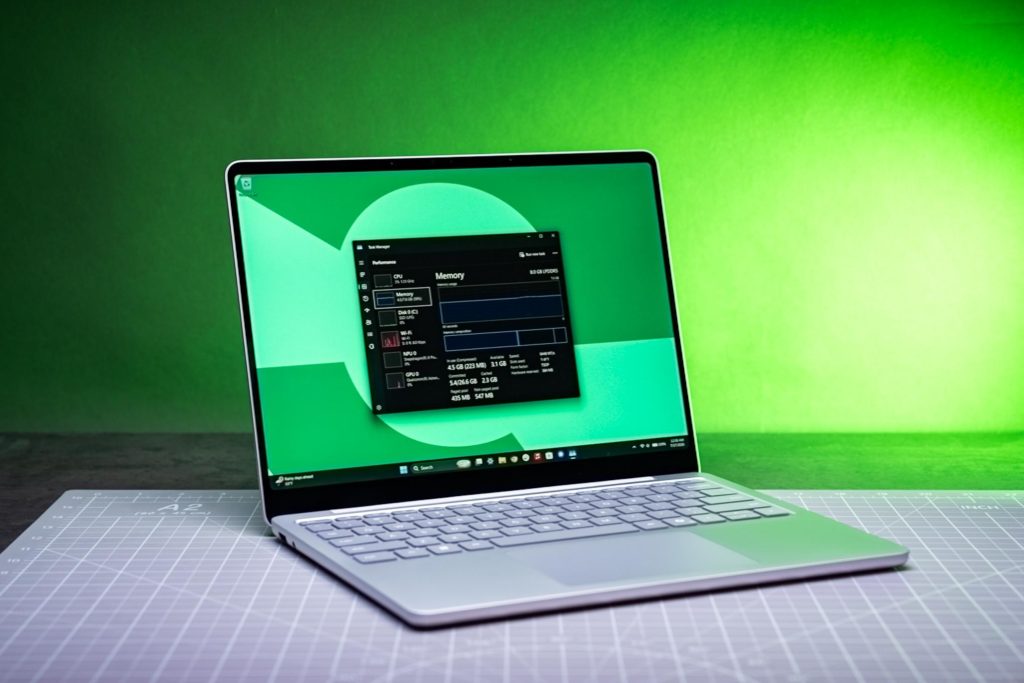
To check the claims, hands-on testing was run on the 13-inch Surface Laptop with 8GB of RAM. That model was reviewed in July, when it was judged to have too little memory for Windows. It was also one of the weakest examples of the current memory shortage, since it has half the RAM of last year’s base model. Microsoft’s own hardware was the test device, and the company’s Windows changes were applied to it directly.
Performance before and after the update
Before the update, the test laptop ran Windows 11 version 25H2, build 26200.8875. With about 20 Chrome tabs open, a 4K YouTube video streaming, and the Slack and Signal apps running, clicking tabs and swiping through Windows with trackpad gestures felt sluggish. Chrome tabs and apps reloaded after brief periods in the background, and the fan ran audibly the whole time.
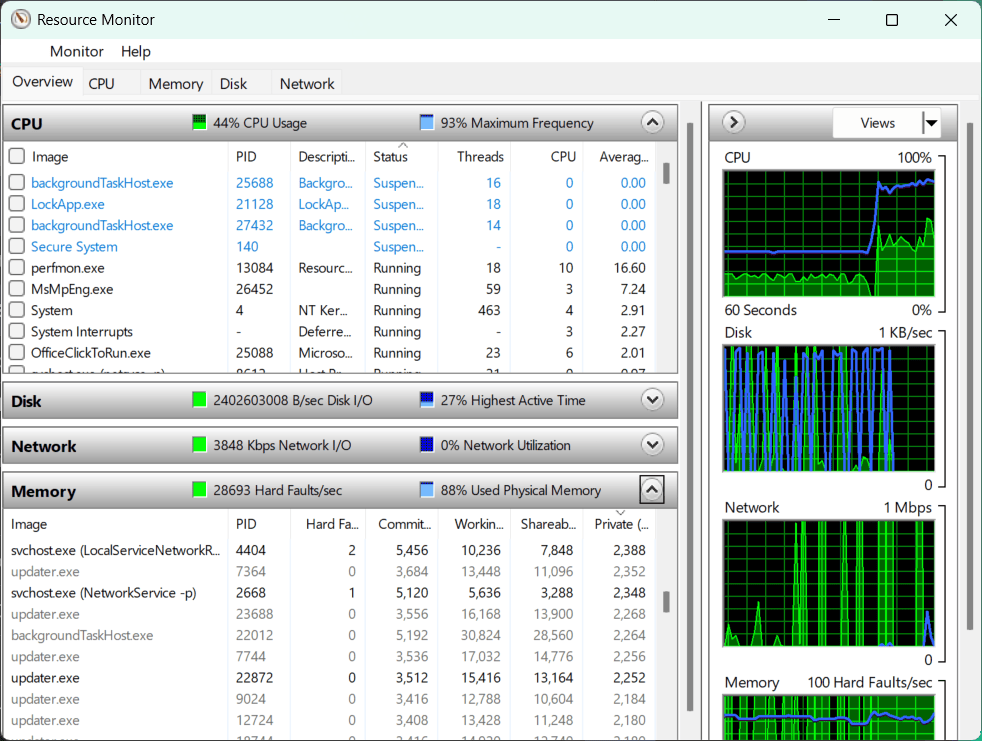
Resource Monitor showed hard faults ranging from just under 700 per second to 29,000 per second before the update. At the high end, the system effectively stalled. The 28,693 reading captured in the test went off the top of the chart.
After updating to Windows 11 version 26H2, build 26300.9974, the same laptop performed better. Memory improvements are included in build 26300.9818 and later. With more than 30 Chrome tabs open and the same video and chat apps running, Windows slowed down, but far less than before. Task View became slightly less responsive at times, which the test described as typical for a system under heavy load. Chrome tabs needed to refresh less often, and the fan started later, ran quieter and cycled off sooner.
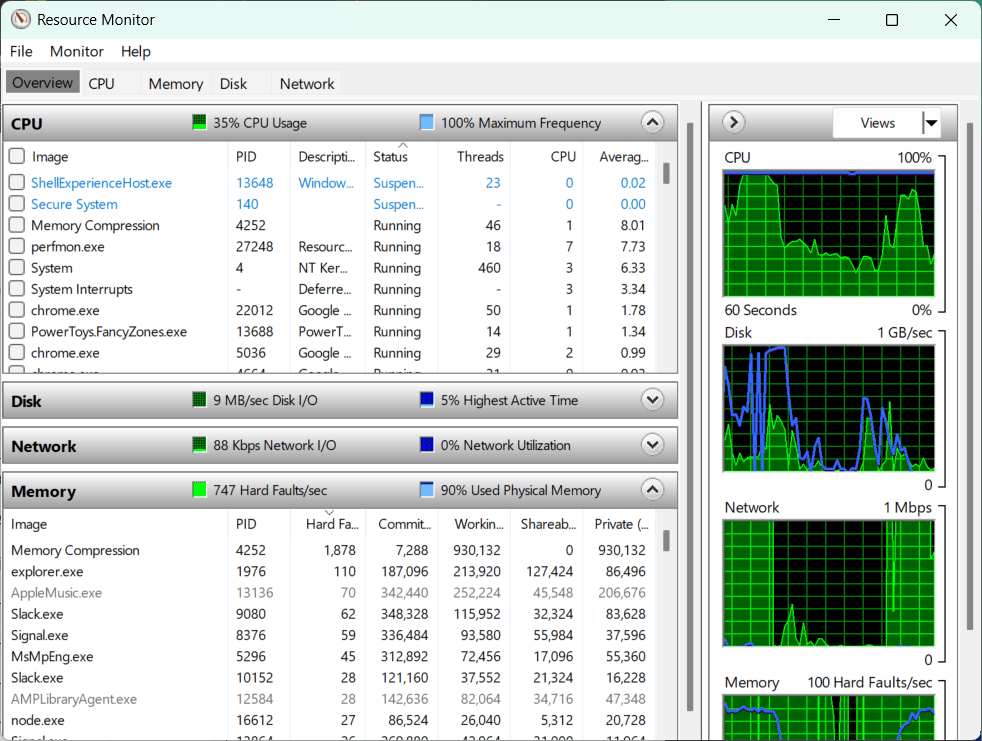
Hard faults at normal operation dropped to under 300 per second, with occasional spikes to about 1,000. Microsoft Edge performed even better than Chrome in the same setup. With 30 tabs, the same 4K video and a Google Meet call running, Edge felt more responsive and recorded fewer hard faults.
What the update means for buyers
The improvements do not turn 8GB into a comfortable amount of memory. The test laptop still crashed Chrome entirely with fewer than three dozen tabs open. Buyers who can afford it are still better served by 16GB, which leaves more headroom for large numbers of files, apps and games and keeps a machine responsive for longer.
The pricing is another concern. The 8GB Surface Laptop costs more than last year’s 16GB model, which makes the lower memory configuration harder to justify for many shoppers. Other operating systems, including Linux, macOS and ChromeOS, are often described as running well on less memory, and Windows 11 has taken on more features tied to Copilot and AI that add to its load.
Microsoft has not said how much of the gain will carry over to other 8GB PCs from different manufacturers. The updated builds are rolling out to Windows 11 users, and the test results come from a single device, so real-world results will depend on each machine’s storage speed and workload.