

YouTuber and comedian Stuart Ashen, known online as Ashens, says Baldur’s Gate 3 is the game that has taken up the most of his time on PC, with 927 hours logged on Steam. In a PC setup interview, he also talked about his early gaming years, his love of obscure DOS fighting games and the Spectrum game he considers the worst retro title he has ever played.

From 8-bit consoles to a Pentium 200 MMX
Ashens grew up playing 8-bit games on consoles such as the Atari 2600 and the Sinclair Spectrum. The first PC game he remembers playing was Syndicate Wars, which ran on his first home-built machine, a Pentium 200 MMX PC housed in a server tower case. He did not enjoy it. “I loved Syndicate. Hated Syndicate Wars,” he said. He gave the game to a friend who liked it, and he moved on to Duke Nukem 3D soon after.
Ashens has been a YouTuber since 2006. He is best known for his reviews of unusual food products on his main channel, which has 1.67 million subscribers. He is also a regular commentator on retro games, both on his twice weekly Ashenscast Twitch stream, which also covers obscure TV and film, and in his book Terrible Old Games You’ve Probably Never Heard Of.
He is also working on a folk horror film told in reverse. He said it is still far from release, so there is no point promoting it yet.
Gloomhaven and a long Baldur’s Gate 3 habit
His current game is Gloomhaven, the digital version of the tabletop board game, which he is playing for the second time. He had logged about 150 hours in it before stepping away, and he has now reached 350 hours. He said the computer handles the setup and the game’s many moving parts, so he can play it in the background while doing other things. The game is team-based, and characters retire after completing personal quests, which lets players swap in new members and changes the group’s dynamic over time.
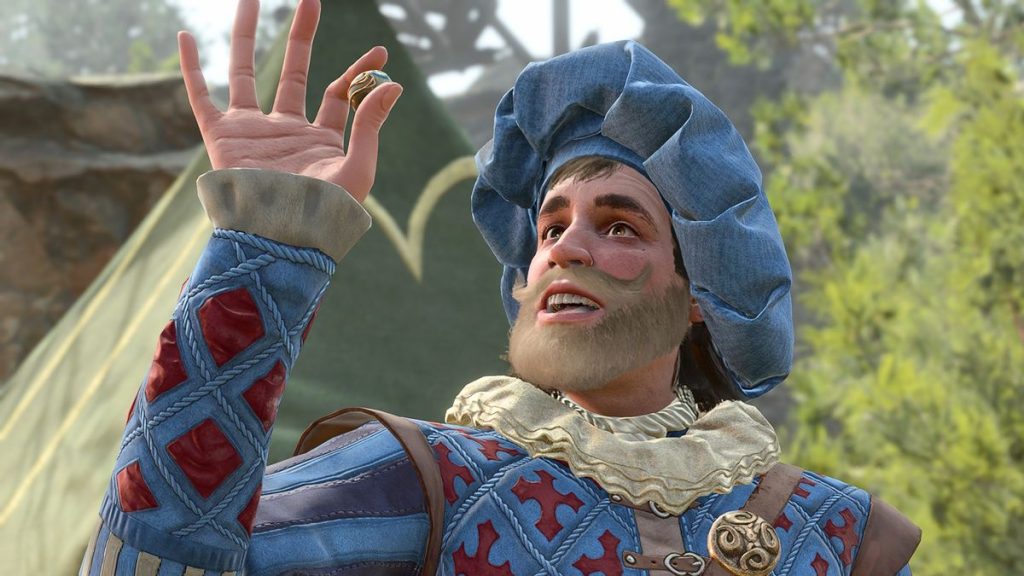
Baldur’s Gate 3 is still installed, and Ashens says he should probably uninstall it for two reasons. It takes up a lot of space, and he worries he will start playing again and lose his spare time. He estimates that 50 to 100 of his Baldur’s Gate 3 hours were spent with the game running in the background while he did other things.
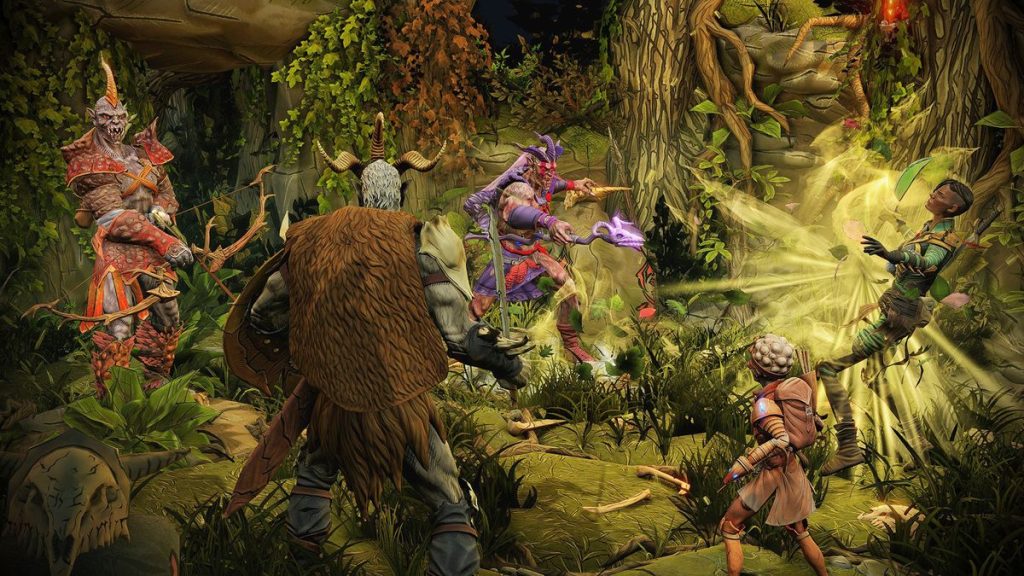
He had not played a Larian Studios game before Baldur’s Gate 3. He received the first Baldur’s Gate free with a graphics card, and he said he could not get on with its combat, which he found hard to follow. He stopped after a couple of hours. Later he saw that Baldur’s Gate 3 had changed its combat to turn-based, and he decided to buy it. He installed it and played it for roughly two and a half to three years.
He tried a Ranger on his first playthrough. He said Rangers are often poorly implemented in RPGs, and he felt the ranged bow combat in Baldur’s Gate 3 worked well, even if his build was probably not the strongest. He compared it with the Ranger-style class in EverQuest, which he said dealt a lot of damage but could not take any. He did not play the Dark Urge origin until his second playthrough, after someone suggested it. He called the Dark Urge experience even better, praising the game’s writing, performance and combat.
Old DOS games and the first Street Fighter
The oldest game on his PC is Street Fighter for DOS, released in 1988. He said he did not play it much, but he keeps it because it was part of a stream in which he tested every DOS fighting game he could find. He said it is entirely different from the arcade version and has more in common with the Commodore 64 release. In his view, most DOS fighting games are poor, with five bad ones for every decent one. He said many of them looked like attempts to copy Mortal Kombat without understanding what made it work.
He also views the arcade original of Street Fighter as thin, with most of its appeal coming from learning and repeating special moves, which were hard to execute on the controls. He called the jump from Street Fighter to Street Fighter 2 one of the biggest improvements in gaming history.
Command & Conquer 3 and a messy desktop
The game he will never uninstall is Command & Conquer 3: Kane’s Wrath. He said he sometimes starts a quick 1v1 skirmish map when he has 10 minutes to spare, and he plays it roughly once every couple of months. He prefers its skirmish mode to the rest of the series because of the variety of units and options, even though he does not consider it the tightest game in the franchise. He added that the game takes up little space by today’s standards.
His most useful non-gaming program is a file search tool. He said it indexes every file on his PC so he can find any file by name instantly, which has helped him recover files he saved under odd names or in the wrong folder. His desktop is a different story. He has desktop icons turned off, but he said his two 4K monitors are still covered in icons from automatic installs. He uses RocketDock to keep useful shortcuts on the side of one monitor, and said he has not looked at the actual desktop in years.
Moonstone, Vector Soccer and the worst Spectrum game
For his best retro discovery, Ashens picked Moonstone on the Amiga. He first played it briefly as a young player, then returned to it on stream and found it better than he remembered. He described it as a hack-and-slash brawler with strong RPG elements, with good artwork and sound.
His worst overall pick is SQIJ for the ZX Spectrum, a game published by Powerhouse. Ashens said other versions for different computers are competent, but the Spectrum version was written by Jason Creighton, who he said was young at the time and did not want to finish the work. According to Ashens, the game was released in a state that barely works. Caps lock was accidentally left on in the source code, and the keys do not respond while it is active, so the player cannot move. Powerhouse released the game twice, first as a standard release and later as part of a compilation, and the bug was in both versions.
Ashens said the bug can be fixed by poking a memory address directly to turn caps lock off, but he said that by the time the game is hacked to work, it has no fun left. He also mentioned Graeme Souness Vector Soccer on the Amiga as another poor game, saying its vector characters move at around three frames per second.