

A user-made utility called a radeon ssd fix is available now for owners of AMD Radeon graphics cards who have seen their drives written to in the background while the PC sits idle. The tool, named Radeon-atieclxx-SSD-Fix, is designed to stop a driver component from repeatedly copying itself, and it does so before AMD ships its planned correction.
What the driver bug is doing to SSDs
Many Radeon users reported an unusual problem in which the system kept writing data to their SSDs even when nothing was running. The activity was traced to atieclxx.exe, which belongs to AMD’s External Events Utility. According to user reports, the write activity ranged from roughly 0.3 MB/s to as high as 5 MB/s.
At the upper end of that range, the figures add up quickly. Sustained at 5 MB/s, the writes would total up to 432 GB per day, or nearly 13 TB per month. Flash memory in SSDs has a limited number of write cycles, so unnecessary writes of this size can shorten a drive’s useful life over time.
How AMD has responded so far
AMD has acknowledged the issue and said a fix is in development. An AMD representative said the correction will arrive in the next Adrenalin driver version, 26.11.1. Until that release is available, affected users have few official options beyond waiting or turning off parts of the software stack.
The company’s timeline leaves a gap of several days to weeks for users who want to stop the writes now. That gap is the reason the community tool has attracted attention.
How the workaround blocks the self-copying
According to the developer, a user identified as necanditool, the problem happens when atieclxx.exe copies itself from the AMD driver into a Windows system profile folder. The copied file is about 660 KB, and the operation can repeat once every second. The path involved is C:WindowsSystem32configsystemprofileAppDataLocalAMDatieclxx.exe.
The utility uses Windows file permissions to stop the SYSTEM account from overwriting that copy. The developer says this keeps the External Events Utility running, so the service itself is not disabled. The tool also checks whether the problematic behavior is present and estimates how many unnecessary writes have occurred based on the detected rate.
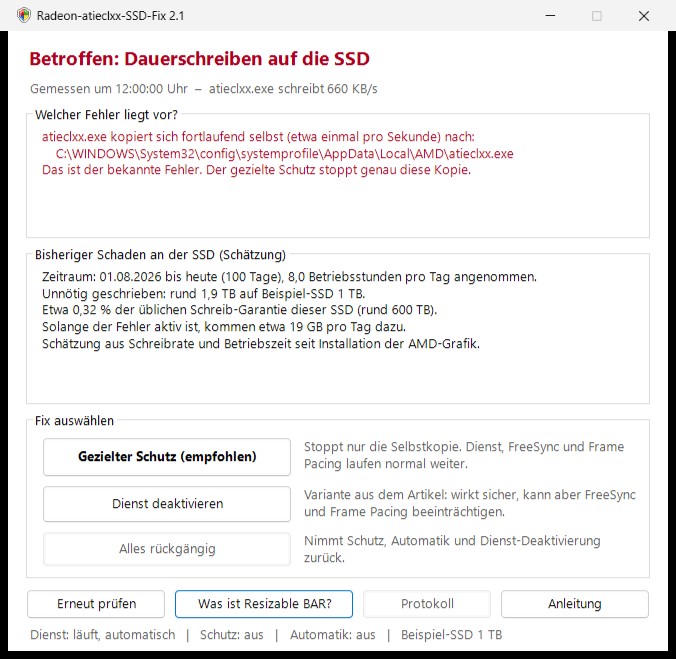
The tool’s interface offers three choices. The recommended targeted protection only blocks the self-copy, while the service, FreeSync and Frame Pacing continue to run normally. A second option disables the service, which the interface says can safely stop the writes but may affect FreeSync and Frame Pacing. A third option reverts all changes, including the protection, automatic startup and service deactivation.
Damage estimates and persistence after updates
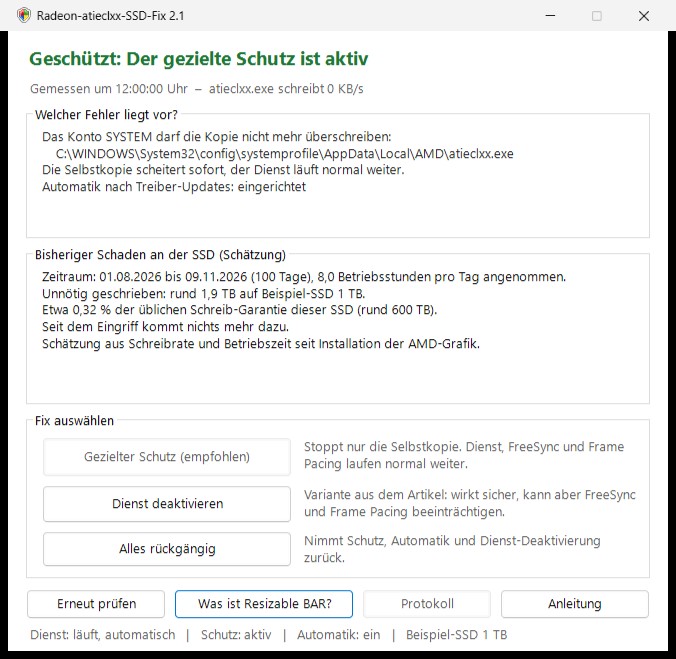
The before-and-after screens show the tool’s own estimates for an example 1 TB SSD. Over a 100-day period from August 1, 2026 to the present, the tool estimates about 1.9 TB of unnecessary writes, or roughly 0.32% of a typical 600 TB write endurance rating for that drive class. While the bug is active, the tool estimates about 19 GB of extra writes per day, assuming 8 operating hours per day. These numbers are calculated from the write rate and operating time, not measured from a specific drive.
The tool also installs a scheduled task that reapplies the protection after each startup. According to the developer, the workaround stays active even after driver updates. The protected status screen reports the self-copy as stopped, with the write rate at 0 KB/s.
What users should weigh before trying the fix
The utility is open source, and its code is publicly available for review. ByteLeaks has not tested the tool, and the developer’s claims about the fix and the damage estimates have not been independently verified. Users who try it are doing so at their own risk.
Anyone considering the tool should first confirm that their system shows the behavior, since the utility’s own scan can help with that. Users who want to avoid any third-party changes can wait for AMD’s Adrenalin 26.11.1 release, which the company says will address the problem.

Whether AMD’s update fully stops the copying, and how quickly it reaches users, remains to be seen. Until then, the radeon ssd fix is the only workaround described in the source material.