

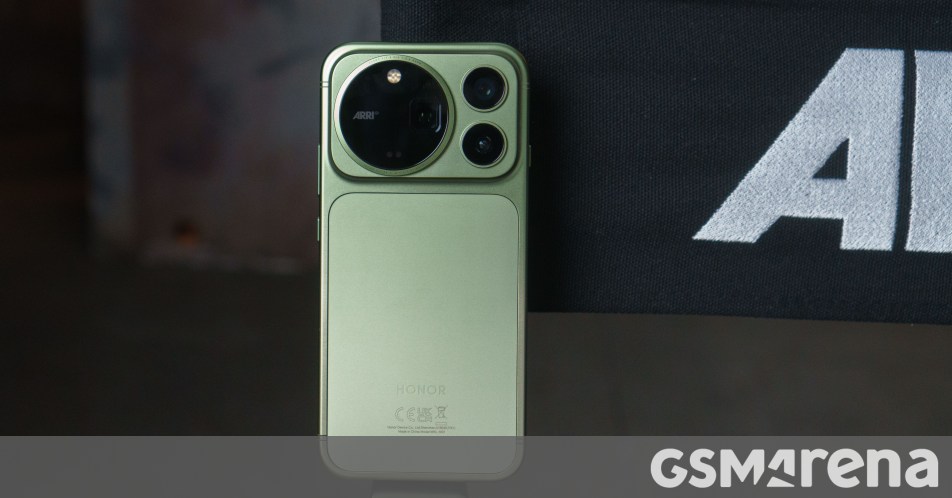
Honor has partnered with German camera maker ARRI to bring some of the look of professional cinema cameras to the Honor Magic9 Pro Max. The companies say the work goes beyond color filters, reaching into the phone’s video processing and calibrating its output to ARRI’s own recording curve.
Honor invited journalists to California for the reveal, which included a guided tour of ARRI’s facility in Burbank, just outside Hollywood. The visit covered ARRI’s history and its role in modern filmmaking.
What makes ARRI cameras distinctive
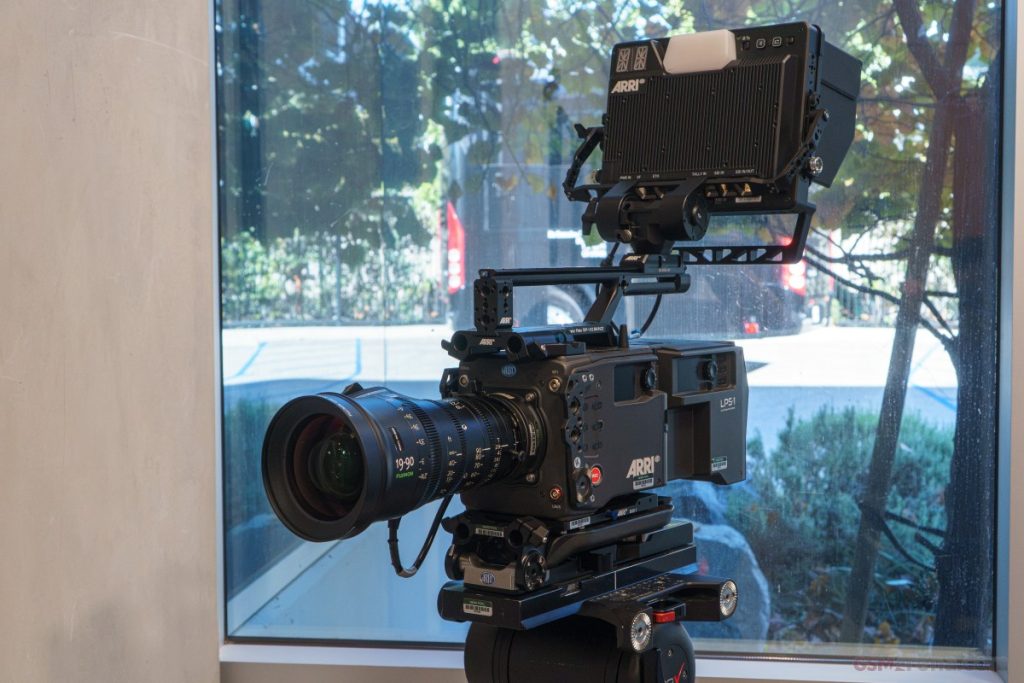
ARRI’s ALEXA LF and Mini LF are among the most respected professional filmmaking cameras. They are known for natural colors, wide dynamic range and a smooth highlight roll-off, meaning bright areas fade gracefully toward white instead of clipping abruptly.
The ALEXA LF records at 4.5K resolution with a sensor slightly larger than photographic full frame. A larger sensor lets cinematographers use longer focal lengths while keeping a relatively wide field of view, which makes it easier to get an intimate look with shallower depth of field.
A fully equipped setup with professional lenses and accessories can cost as much as $100,000. ARRI cameras are a staple of Hollywood productions, and several ALEXA models have been used on major films.
How the Honor Magic9 Pro Max pipeline works
Honor says it redesigned the Magic9 Pro Max video-processing pipeline and tuned it to the phone’s camera hardware. The phone also includes Honor’s own imaging chip, the Honor H1, which performs noise reduction directly on RAW image data before further processing. The stated goal is to preserve more detail and dynamic range.
ARRI’s Image Science team worked on calibration. The main and telephoto cameras on the Magic9 Pro Max are tuned to closely follow ARRI’s LogC3 curve, which adapts the tonal response of ARRI’s cinema cameras to the smartphone hardware. The ultrawide camera is not included in this tuning.
Why Log recording matters for editing
Log recording generally gives editors more room to adjust color and contrast in post-production than conventional video. Rather than baking a fixed look into the footage, it keeps a wider range of tonal information for grading. That benefit only holds if the camera hardware can capture the detail in the first place.
The Magic9 Pro Max can shoot in LogC3 and can also record in the ARRI Wide Gamut 3 color space. Honor says this allows footage from the phone and from professional ARRI cameras to be handled with the same established color-grading workflows.
For users who prefer not to grade footage by hand, the phone includes ARRI Looks, a collection of 87 cinematic color treatments that can be applied directly to video.
How close the footage gets to the ALEXA Mini LF
In a studio demonstration, Honor showed color-graded LogC3 footage. Early hands-on impressions describe the results as close to the ALEXA Mini LF in color and tonal rendering. The professional camera still held a clear advantage in sharpness and fine detail.

Honor and ARRI also showed slides on the calibration work. One verified that the LogC3 curve was implemented correctly on the phone. Another calculated the color differences between the Mini LF and the Honor device under daylight conditions.
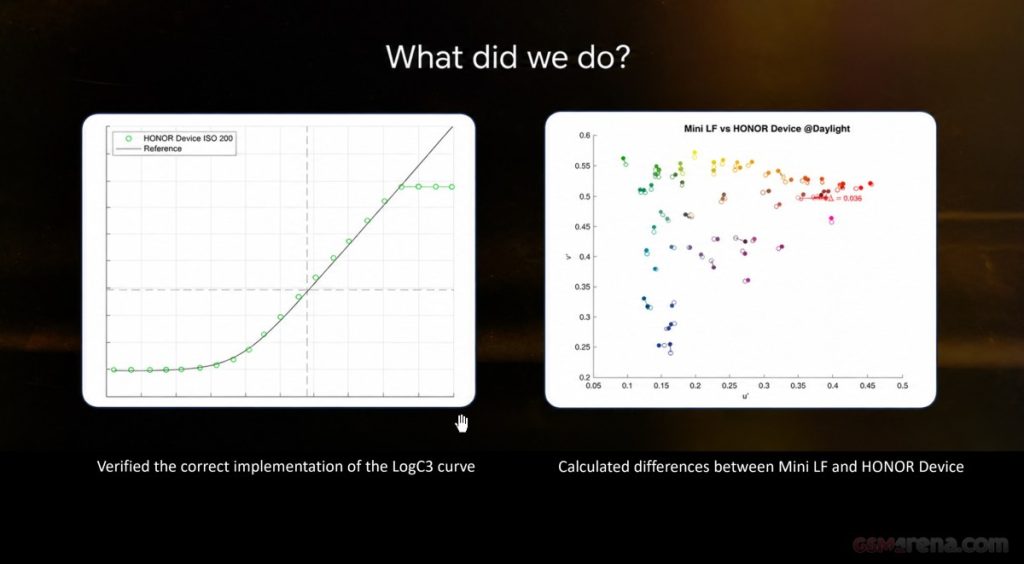
Matching color and tone is only part of image quality. Sharpness, detail and overall image quality depend on the camera hardware underneath, and the Mini LF remains in a different class for those qualities. The ARRI tuning is a software layer on top of the Magic9 Pro Max’s sensors and lenses, not a replacement for them.
Honor has not announced pricing for the ARRI-tuned video features in this report. Buyers interested in the Log and Looks workflow should check which camera modes are available on their model and region when the phone is sold.